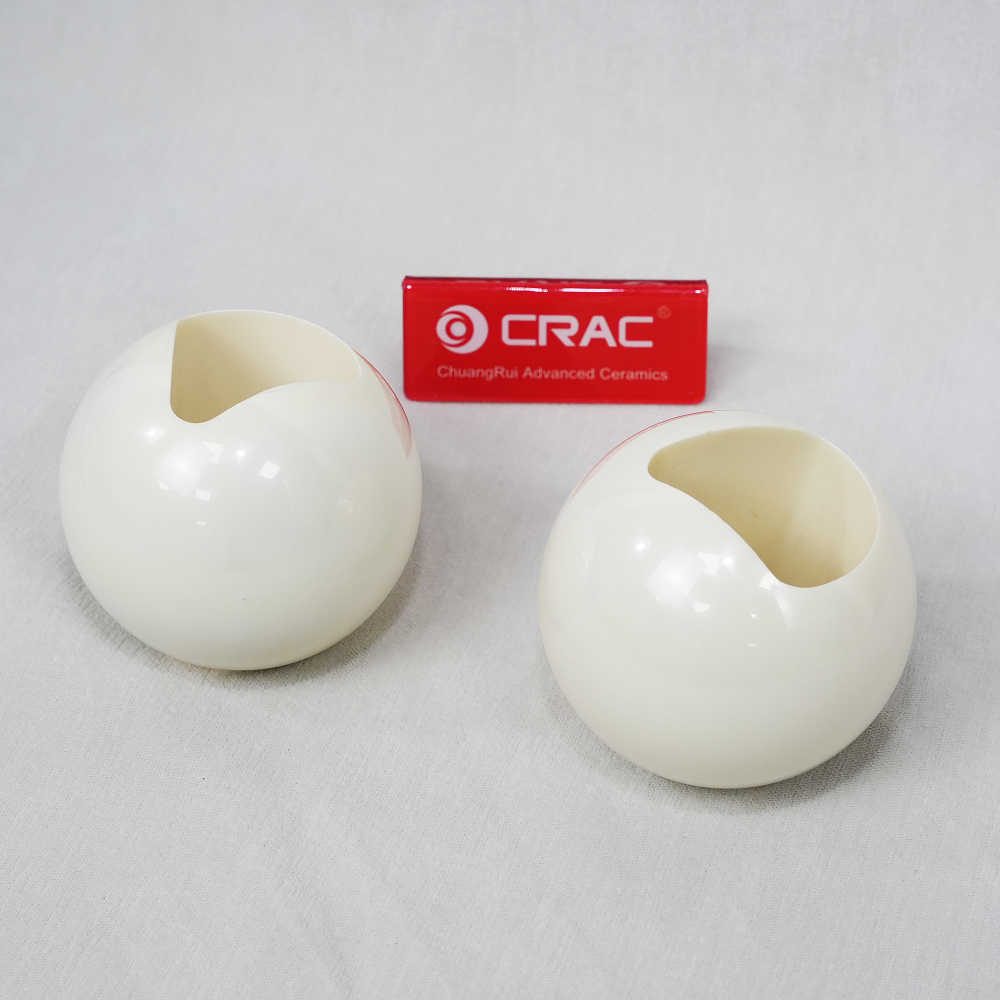
Wear Resistant Zirconia Ceramic Valve Core: Solving Erosion and Corrosion Challenges in Fluid Systems
Wear Resistant Zirconia Ceramic Valve Core: Solving Erosion and Corrosion Challenges in Fluid Systems
Wear Resistant Zirconia ceramic valve Core: Solving Erosion and Corrosion Challenges in Fluid Systems
Advancing industrial fluid control through high-precision engineering and the unmatched material properties of advanced ceramics.
The Hidden Cost of Valve Failure in Harsh Environments
In modern fluid handling, whether it is high-pressure slurry transport, chemical dosing, or pharmaceutical processing, the valve is often the weakest link. Traditional metal valve cores suffer from a persistent dilemma: the trade-off between mechanical strength and chemical stability. When faced with abrasive particles or corrosive fluids, stainless steel or even specialized alloys eventually succumb to surface degradation, leading to internal leakage, frequent maintenance shutdowns, and skyrocketing operational costs.
Are you struggling with system downtime caused by rapid valve wear? Does metal contamination from eroding valve parts compromise the purity of your battery materials or pharmaceutical batches? These are not just technical hurdles; they are direct threats to your bottom line.
This guide serves as a comprehensive resource for engineers and procurement specialists seeking a permanent solution. By the end of this article, you will understand why the Wear Resistant Zirconia Ceramic Valve Core has become the gold standard for high-performance fluid control and how to integrate this technology into your systems to achieve a maintenance-free lifecycle.
Understanding the Material Science: Why Zirconia?
Zirconia (ZrO2), specifically Yttria-Stabilized Tetragonal Zirconia Polycrystal (Y-TZP), is often referred to as "ceramic steel" due to its exceptional fracture toughness and mechanical strength. Unlike traditional ceramics that are brittle, the Wear Resistant Zirconia Ceramic Valve Core utilizes a unique transformation toughening mechanism that inhibits crack propagation.
Extreme Hardness: Ranking over 8.5 on the Mohs scale, it effectively resists abrasion from hard mineral slurries.
Chemical Inertness: Resistant to strong acids and alkalis, preventing corrosion-related failures.
Thermal Stability: Maintains structural integrity under high temperatures where plastics would melt.
The Engineering Advantages of Wear Resistant Zirconia Ceramic Valve Core
Zero Contamination
For the lithium battery and pharmaceutical industries, metal ions are a critical impurity. A Wear Resistant Zirconia Ceramic Valve Core ensures that no metallic particles are introduced into the media during high-intensity fluid transport.
Micro-Precision Sealing
Through advanced CNC grinding and polishing, our valve cores achieve a surface roughness of Ra < 0.1μm. This "mirror finish" ensures a perfect seal, reducing the torque required for operation and extending the life of the actuator.
Self-Lubrication
The low coefficient of friction inherent in zirconia means these valve cores resist "stiction" even after long periods of inactivity, making them ideal for emergency shut-off applications.
Comparative Analysis: Ceramic vs. Metal
Feature
Zirconia Ceramic
Stainless Steel (316L)
Wear Resistance
Excellent (10x longer life)
Moderate (Rapid erosion)
Acid/Base Resistance
Superior
Limited (Pitting risk)
Hardness (HV)
1200 - 1400
200 - 250
Maintenance Frequency
Very Low
High
Why Partner with CRAC Advanced Ceramics?
With over a decade of specialization in advanced ceramic materials, Chuangrui (CRAC) has served hundreds of global clients in industries ranging from lithium battery production to high-end chemical mechanical engineering.
Rigorous Quality Control
Each Wear Resistant Zirconia Ceramic Valve Core undergoes ultrasonic testing, precise dimensional inspection using CMM, and high-pressure leak testing to ensure it meets ISO 9001 standards.
Custom Engineering Capability
We don't just provide off-the-shelf parts. Our technical team works with you to design custom geometries and select the optimal zirconia formulation (e.g., ATZ or Y-TZP) for your specific fluid dynamics.
Q: How does the Wear Resistant Zirconia Ceramic Valve Core handle thermal shock?
A: While ceramics are generally sensitive to rapid temperature changes, our zirconia components are engineered with optimized grain structures to provide superior thermal shock resistance compared to alumina. However, we recommend gradual pre-heating for extreme temperature differentials.
Q: Can you provide compatible ceramic seats for the valve cores?
A: Yes. We recommend using a matching zirconia ceramic seat to ensure consistent wear rates and a perfect seal. Combining ceramic with metal seats can sometimes lead to accelerated wear on the metal component.
Q: What is the typical lead time for custom valve cores?
A: For standard geometries, samples can be delivered within 2-3 weeks. For complex custom injection-molded parts, the typical lead time is 4-6 weeks, including mold fabrication and sintering.
Q: Are these suitable for food-grade or medical applications?
A: Absolutely. Zirconia is biocompatible and chemically stable, making the Wear Resistant Zirconia Ceramic Valve Core an ideal choice for sanitary applications where cleanliness is paramount.
Ready to Upgrade Your Fluid Control System?
Contact our technical experts today for a free consultation and performance analysis.