
27 Years of Experience
CHAUNG RUI brings over 27 years of expertise in manufacturing high-quality ceramic products, ensuring reliability and consistency in every component.
Higher Product Performance
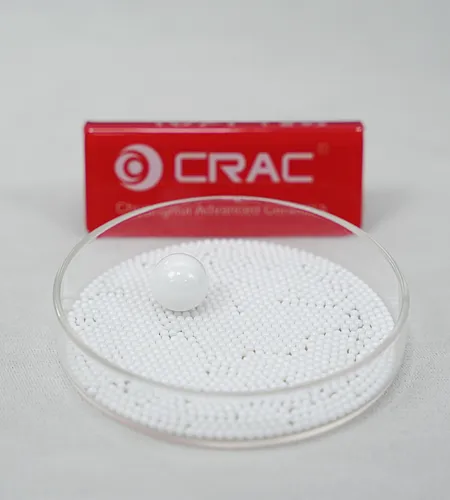
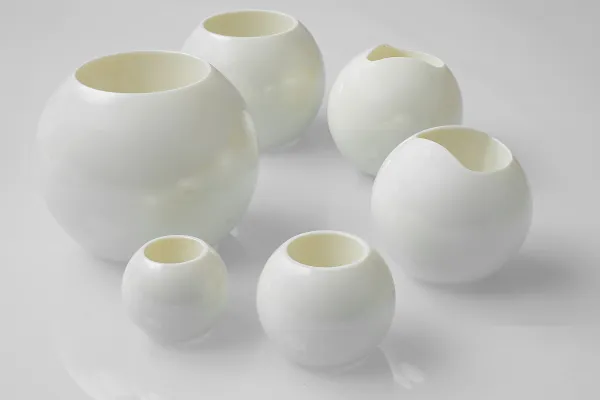
Our zirconia balls exhibit superior hardness, wear resistance, and chemical inertness, leading to extended operational lifespan and enhanced efficiency in grinding and milling applications.
Greater Processing Capacity
With advanced manufacturing facilities and efficient processes, CHAUNG RUI can meet large-scale production demands while maintaining stringent quality control standards.
Better Technical Support
We provide comprehensive technical support, leveraging our deep knowledge of ceramic materials and applications to assist customers in optimizing their processes and achieving better performance outcomes.
Beyond Hardness: The Transformation Toughening Revolution in Yttria Stabilized Zirconia Beads
For too long, the grinding media industry sold hardness as the ultimate metric. But anyone who has witnessed a batch of “hard” ceramic beads turn into a slurry of fine debris knows the truth: hardness without toughness is a liability. It was the pursuit of true resilience—not just resistance to indentation, but to propagation of failure—that led to the widespread adoption of yttria stabilized zirconia beads. At CRAC, our journey since 2006 has been about mastering this alchemy, turning a promising material science concept into the reliable, industrial-grade workhorse that defines modern precision milling.
The magic of a yttria stabilized zirconia bead is a story written at the atomic scale. Imagine a crystal lattice under immense shear and impact stress. In an unstabilized bead, this stress causes a sudden, irreversible phase change that volume-contracts, tearing the material apart from within—this is brittle fracture. Now, introduce a few percent of yttria ions. These larger ions strain the lattice, pinning it in a metastable “tetragonal” phase that wants to change under stress. When a crack initiates, the stress concentration at its tip provides just the trigger needed. The surrounding crystals transform to a more stable “monoclinic” phase, which expands. This micro-expansion acts like a myriad of internal clamps, applying compressive stress directly on the crack faces, halting it in its tracks. This is transformation toughening: using the material’s inherent desire to transform as a mechanism to arrest failure. Our beads don’t just resist damage; they actively fight it.
This fundamental property changes everything on the production floor. It means when a mill is charged with CRAC’s yttria stabilized zirconia beads, the operator gains predictability. The beads will wear, yes—but they will wear slowly, evenly, and most importantly, they will not fracture. You eliminate the “black swan” event of a batch contaminated by sudden media breakage. For industries like lithium battery production, where trace metallic contamination from mill wear liners is bad enough, introducing foreign ceramic fines from broken beads is a complete disaster. Our YSZ beads provide a sealed, predictable boundary between the grinding action and your product. The grinding environment remains constant from the first hour to the last, enabling precise control over particle size distribution—a control that is impossible when the media itself is disintegrating unpredictably.
Therefore, specifying yttria stabilized zirconia beads from CRAC is more than a procurement decision; it’s a process design choice. It’s the choice to build your advanced material manufacturing on a foundation of kinetic resilience. It acknowledges that the most critical component in your mill isn’t the motor or the liner; it’s the millions of tiny energy-transfer agents crashing into your material. By ensuring those agents are themselves nearly indestructible, you unlock the ability to push your process to its limits—higher energy, finer targets, longer cycles—with confidence. In a world demanding ever-more-perfect materials, the toughness engineered into every YSZ bead isn’t just a feature; it’s the enabling technology for the next breakthrough.
Related Products
More items about zirconia beads
We Have The Best Solutions for Your Business
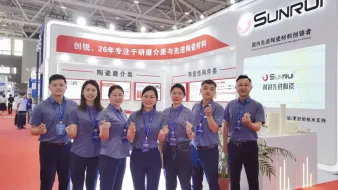
Welcome to Zhuzhou Chuangrui High Strength Ceramics Co., Ltd., a pioneering manufacturer specializing in high-performance ceramic products. Since our establishment in 2006, we have been at the forefront of technological innovation and leadership in the ceramic industry. Our commitment to excellence is reflected in our core values of technological innovation, scale production, and distinctive processes.
User Reviews
What users say about CRAC
CHUANG RUI's ceramic products have exceeded our expectations in terms of performance and quality. The nano zirconia beads we use for grinding our battery materials are far more durable and effective than what we've used in the past. The technical support team has also been incredibly helpful in optimizing our processes.

Emma Johnson
As a precision parts manufacturer, we rely on CHUANG RUI's ceramic injection molding expertise to produce some of our most intricate components. The tolerances they are able to hold are truly impressive, allowing us to maintain the high standards our customers demand.

Michael Lee
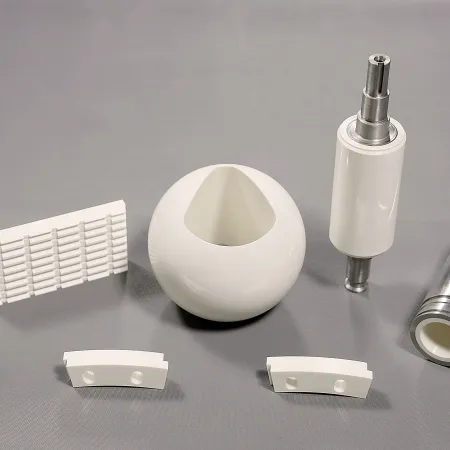
CHUANG RUI's zirconia structural parts have been a game-changer for us in the chemical industry. Their corrosion and wear resistance has significantly extended the lifespan of our processing equipment, leading to meaningful cost savings. I highly recommend their products to anyone in need of advanced ceramic solutions.

Sarah Patel
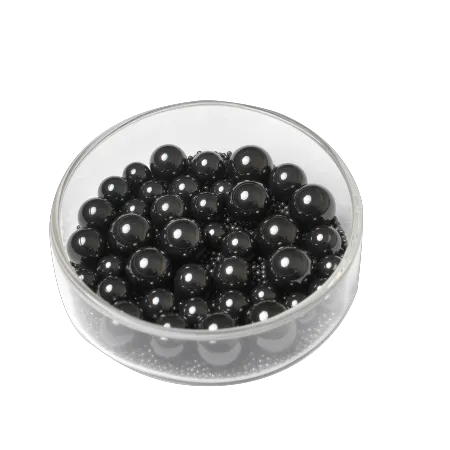
We've been using CHUANG RUI's silicon nitride microbeads for dispersing our specialty inks and coatings, and the results have been phenomenal. The consistency and fineness of the dispersion is unmatched, leading to superior product quality and a smoother application process. Their technical team has also been extremely responsive and helpful in optimizing our formulations.

David Wong
Frequently Asked Question
Do you have any question?
Yttria stabilization is a deliberate doping process that changes the very crystal structure of zirconia. Pure zirconia undergoes a destructive phase change under stress, leading to brittle fracture. Adding yttria (Y₂O₃) locks the zirconia into a tougher, metastable tetragonal phase. When a crack tries to propagate in a CRAC yttria stabilized zirconia beads, the stress field triggers a local phase transformation around the crack tip. This transformation expands the crystal lattice, effectively “squeezing” the crack shut and stopping its growth. This “transformation toughening” mechanism is what grants our beads their legendary durability and resistance to catastrophic failure.
The higher cost reflects the premium raw materials (high-purity yttria) and the precise, controlled sintering process required to achieve uniform stabilization. The question of worth is answered by Total Cost of Ownership (TCO). While cheaper, unstabilized beads may have a lower upfront price, they carry a high risk of sudden fracture. This leads to inconsistent grind, metallic contamination from mill wear, and frequent media replacement. CRAC’s yttria stabilized zirconia beads last significantly longer, provide stable processing conditions, and eliminate the risk of catastrophic contamination. For high-value materials, the investment in YSZ beads pays for itself many times over in reduced downtime, higher yield, and guaranteed product purity.
Absolutely. The yttria content is a critical design parameter that tailors the bead’s mechanical properties. A lower yttria content (e.g., 3% YSZ) results in a higher degree of transformation toughening, offering maximum fracture resistance—ideal for extremely high-impact milling. A higher content (e.g., 5% YSZ or more) creates a more stable, cubic-phase-dominated structure with slightly lower toughness but superior long-term phase stability and wear resistance in less severe, long-duration processes. CRAC provides expert guidance to select the optimal YSZ grade for your specific energy input, mill type, and material hardness.
Yes, their thermal stability is a key advantage. The yttria-stabilized structure maintains its integrity across a wide temperature range. Unlike some alternative media that may soften or degrade, CRAC’s yttria stabilized zirconia beads retain their hardness and toughness even in processes where friction generates significant heat. This makes them suitable for demanding applications in advanced ceramics or specialized chemical reactions where thermal stability is as important as mechanical performance.
Their robustness is a key feature. Unlike some advanced ceramics that are hygroscopic or sensitive to thermal shock from rapid temperature changes, properly sintered yttria stabilized zirconia beads from CRAC are chemically inert and physically robust. They do not require climate-controlled storage and are resistant to moisture. Standard handling procedures for ceramic grinding media apply. Their toughness actually makes them more forgiving during loading and unloading of mills compared to more brittle alternatives.
The decision hinges on risk tolerance and process severity. If you are milling high-value, sensitive materials (pharmaceuticals, battery powders, electronics) in high-energy bead mills or sand mills, the risk of standard bead failure is too great. Yttria stabilized zirconia beads are essential. For lower-energy dispersion of lower-value materials, standard beads might be a cost-effective choice. A simple rule from our decades of experience: if unexplained contamination appears, process consistency drifts, or bead breakage is observed, you have already entered the domain where upgrading to CRAC’s YSZ beads is not just beneficial, but necessary for reliable operation.
Our updates and blog posts
Exploring the World of yttria-stabilized-zirconia-beads: CHUANG RUI's Expertise Unveiled
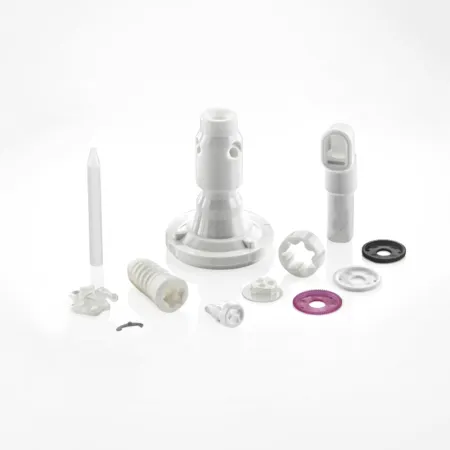
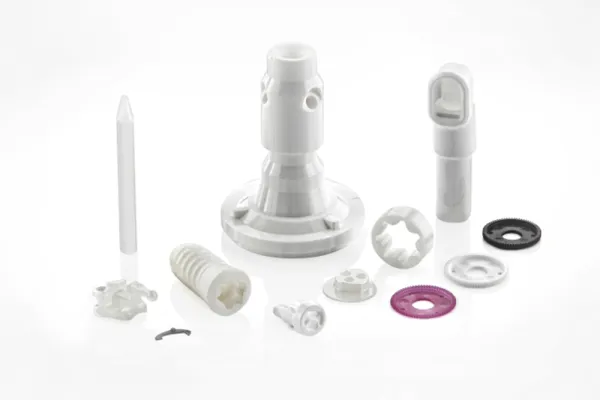
Precision ceramic parts are indispensable components in various high-tech industries, known for their exceptional mechanical, thermal, and chemical properties. At CHUANG RUI, we specialize in the design and manufacturing of precision ceramic parts that meet the stringent demands of modern applications. In industries such as aerospace, medical technology, automotive, and electronics, precision ceramic parts offer unique advantages over traditional materials like metals and plastics. Their outstanding characteristics include high hardness, excellent wear resistance, corrosion resistance, and superb thermal stability. These properties make them ideal for critical applications where reliability and performance are non-negotiable. At CHUANG RUI, we leverage advanced ceramic materials such as alumina, zirconia, silicon nitride, and others to create customized ceramic components tailored to specific operational requirements. Our engineering expertise and state-of-the-art manufacturing processes ensure precise dimensions, tight tolerances, and consistent quality across all our products. Our precision ceramic parts find application in a wide range of industries and technologies. For instance, in semiconductor manufacturing, our components are used in wafer processing equipment due to their non-reactive nature and thermal management capabilities. In medical devices, ceramic parts are employed in surgical tools and implants for their biocompatibility and durability. In automotive applications, they contribute to reducing emissions and enhancing engine efficiency. Partnering with CHUANG RUI for your precision ceramic needs offers numerous advantages. Our dedicated team of engineers collaborates closely with clients to understand their specific requirements and provide innovative solutions. We emphasize continuous improvement and invest in research and development to stay at the forefront of ceramic technology. In conclusion, precision ceramic parts from CHUANG RUI represent the pinnacle of engineering excellence and material innovation. Whether you are looking to improve the performance of your industrial equipment, enhance the reliability of medical devices, or optimize the efficiency of electronic components, our precision ceramic solutions deliver unmatched quality and performance.
Exploring yttria-stabilized-zirconia-beads: CHUANG RUI's Expertise Unveiled
Ceramic valve cores are pivotal components in fluid control systems, renowned for their durability, precision, and reliability. At CHUANG RUI, we specialize in the design and manufacturing of high-quality ceramic valve cores that cater to diverse industrial applications. Ceramic valve cores are essential for maintaining precise flow control in various industries, including plumbing, HVAC, automotive, and aerospace. They offer exceptional wear resistance, corrosion resistance, and thermal stability, making them ideal for harsh operating environments where traditional materials may fail. CHUANG RUI harnesses advanced ceramic materials like alumina and silicon nitride to craft ceramic valve cores that exceed industry standards. Our stringent quality control processes ensure each valve core meets exacting specifications for performance and longevity. Our ceramic valve cores find widespread use in applications requiring reliable and efficient fluid handling. In plumbing systems, they ensure leak-free operation and long-term durability. In HVAC systems, ceramic valve cores contribute to energy efficiency and precise temperature regulation. Automotive and aerospace industries rely on these cores for their ability to withstand extreme temperatures and harsh chemicals. Partnering with CHUANG RUI for ceramic valve cores ensures access to cutting-edge technology and engineering expertise. We collaborate closely with clients to deliver customized solutions that optimize system performance and reliability. Our commitment to innovation and customer satisfaction drives us to continually improve and adapt to evolving industry needs. In conclusion, ceramic valve cores from CHUANG RUI represent a pinnacle of reliability and technological innovation. Whether you require robust solutions for industrial applications or precision components for critical systems, our ceramic valve cores offer unmatched quality and performance. Contact CHUANG RUI today to discover how our ceramic valve cores can elevate the efficiency and reliability of your fluid control systems.
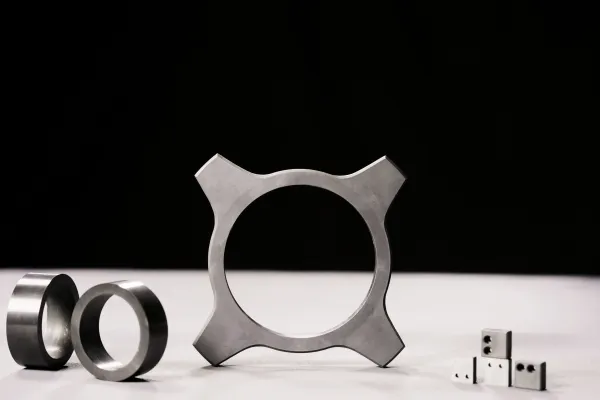
Unveiling the Expertise in Silicon Nitride Fittings by CHUANG RUI
Silicon nitride fittings play a crucial role in demanding industrial applications due to their exceptional strength, heat resistance, and corrosion resilience. CHUANG RUI specializes in manufacturing high-quality silicon nitride fittings that meet stringent modern industry requirements. Silicon nitride, a ceramic material known for its high hardness and excellent thermal and chemical resistance, makes it an ideal choice for environments where traditional materials may deteriorate over time. CHUANG RUI employs advanced manufacturing techniques and cutting-edge ceramic materials to produce silicon nitride fittings with precise dimensions and outstanding performance characteristics. These fittings are designed to withstand extreme temperatures, corrosive chemicals, and high-pressure conditions reliably. Silicon nitride fittings find extensive use in industries such as chemical processing, aerospace, semiconductor manufacturing, and automotive. They serve critical roles like seals, bearings, nozzles, and insulating components, ensuring reliability and long-term performance. Partnering with CHUANG RUI for silicon nitride fittings means accessing expertise honed through years of innovation and dedication to quality. Our team collaborates closely with clients to deliver tailored solutions that optimize system performance and efficiency. In summary, silicon nitride fittings from CHUANG RUI represent the pinnacle of ceramic engineering excellence. Whether you need robust fittings for industrial machinery or precision components for aerospace applications, our silicon nitride fittings offer unmatched durability and reliability. Contact CHUANG RUI today to explore how our silicon nitride fittings can enhance the performance and longevity of your critical systems.