wx

Search Products

Why 0.5 mm Zirconia Balls Are Widely Used in High-Energy Bead Milling Equipment

Why 0.5 mm zirconia balls Are Widely Used in High-Energy Bead Milling Equipment

Optimizing nano-scale dispersion and grinding efficiency through advanced material science and precision engineering.

The Challenge of Sub-Micron Grinding

In our decade of serving the advanced materials industry at Chuangrui advanced ceramics (CRAC), we frequently encounter a common bottleneck: how to achieve consistent sub-micron or even nanometer particle sizes without compromising purity or escalating operational costs. Many of our clients in the lithium battery and pharmaceutical sectors struggle with high energy consumption and media wear when using traditional grinding sizes.

The solution often lies not just in the machinery, but in the media selection. Specifically, 0.5 mm Zirconia Balls have emerged as the "sweet spot" for high-energy bead milling. In this guide, I will share our professional insights into why this specific size has become the gold standard for high-intensity processing.


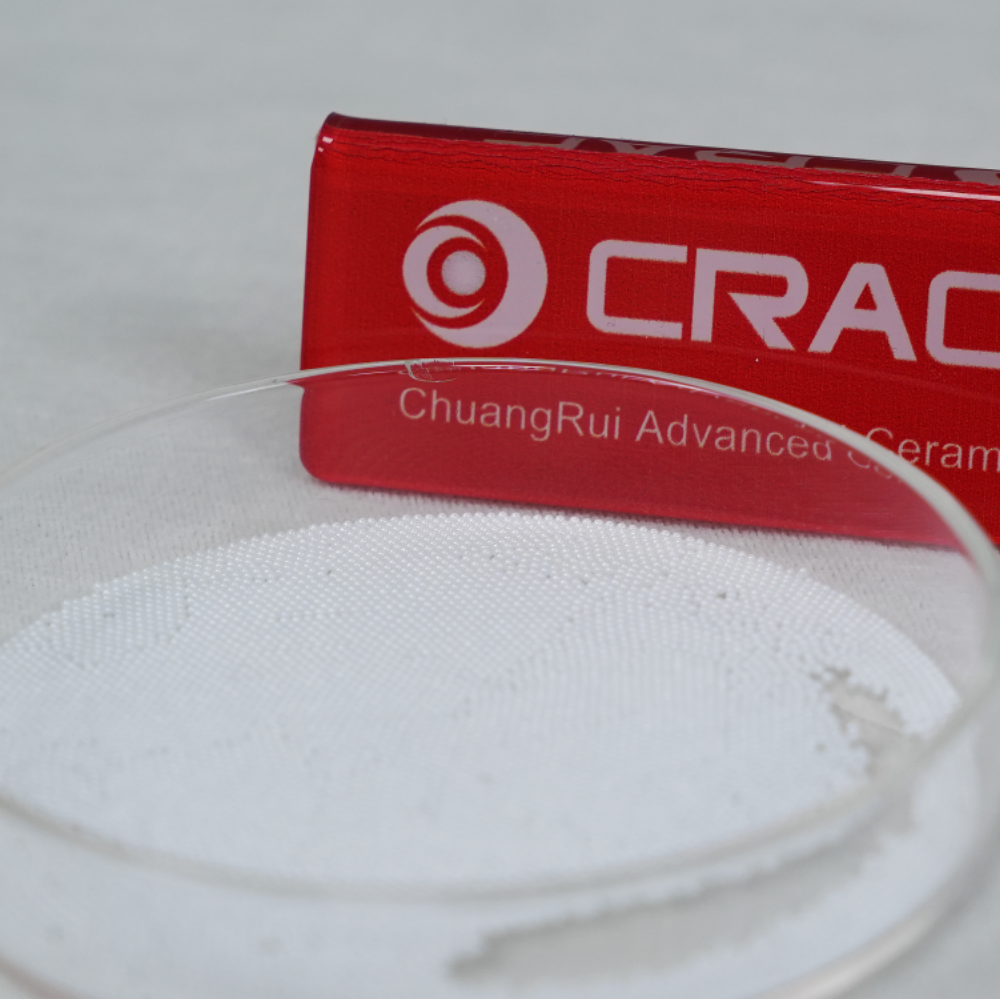
High Energy Bead Milling

Why Size Matters: The Physics of 0.5 mm Zirconia Balls

High-energy bead mills, such as horizontal sand mills, rely on the kinetic energy transferred from the rotor to the grinding media. The efficiency of 0.5 mm Zirconia Balls in these systems is driven by two primary physical factors:

1. Increased Collision Frequency

For a fixed volume of the grinding chamber, using smaller beads significantly increases the number of individual media pieces. This results in a much higher collision frequency between the beads and the target particles. Our data shows that 0.5 mm Zirconia Balls provide thousands of more contact points per second compared to 2.0 mm beads, accelerating the reduction of particle size.

2. Enhanced Surface Area

Smaller media provide a much larger total surface area for shearing and frictional forces. In high-viscosity applications like high-end inks or coatings, the shearing action provided by 0.5 mm Zirconia Balls ensures that agglomerates are broken down into primary particles more effectively than larger, heavier media.

The CRAC Standard: Quality and Expertise

At CRAC, our 0.5 mm Zirconia Balls (Yttria-stabilized, Zr95 series) are manufactured using a unique micro-bead forming process that ensures perfect sphericity and a dense internal structure. This is critical because in high-energy mills, low-quality beads can shatter, leading to equipment damage and slurry contamination.

Our professional solution involves a rigorous quality control process where every batch is tested for:

  • Ultra-Low Wear Rate: Ensuring the longevity of the media and the purity of the final product.
  • High Fracture Toughness: Resisting the intense centrifugal forces found in modern pin-type mills.
  • Precise Size Distribution: Eliminating "over-sized" beads that block separator screens.

Frequently Asked Questions (FAQ)

How do I know if 0.5 mm is the right size for my mill?

Generally, the bead size should be about 10 to 20 times larger than the desired final particle size. If you are targeting a D90 of 50-100nm, 0.5 mm media is typically the ideal starting point.

Do you provide samples for testing?

Yes. We understand that precision grinding requires empirical evidence. We provide free samples (up to a certain weight) for professional clients to conduct pilot runs. Please contact our technical team at crac@crac-cn.com for details.

What is the typical lead time for large orders?

Standard sizes like our 0.5 mm Zirconia Balls are usually kept in stock for immediate shipment. Custom or large-volume orders typically have a lead time of 7-14 business days.

Elevate Your Grinding Efficiency Today

Don't let subpar grinding media limit your product's potential. Consult with CRAC's engineering team to optimize your bead milling process.

© 2026 Chuangrui Advanced Ceramics (CRAC). All Rights Reserved.

Get a Full Quote

Please write a email.