Achieve Unmatched Precision and Efficiency in High-Intensity Milling Processes with CRAC Advanced Ceramics.
Introduction: The Challenge of High-Performance Grinding
In modern industrial manufacturing, the pursuit of ultra-fine particle sizes often leads to significant operational challenges. Engineers and production managers frequently face the dilemma of high media wear rates, slurry contamination, and escalating energy costs. Whether you are in the new energy lithium battery industry or producing high-end pigments, the choice of grinding media is the single most critical factor in determining your final product quality.
This guide serves as a comprehensive tool to help you navigate the complexities of Zirconia Balls. By understanding the underlying material science and technical specifications, you can transform your milling department from a cost center into a competitive advantage. We will explore the essential metrics that define high-quality media and how CRAC solutions address these industrial pain points.
Understanding the Basics: What are Zirconia Balls?
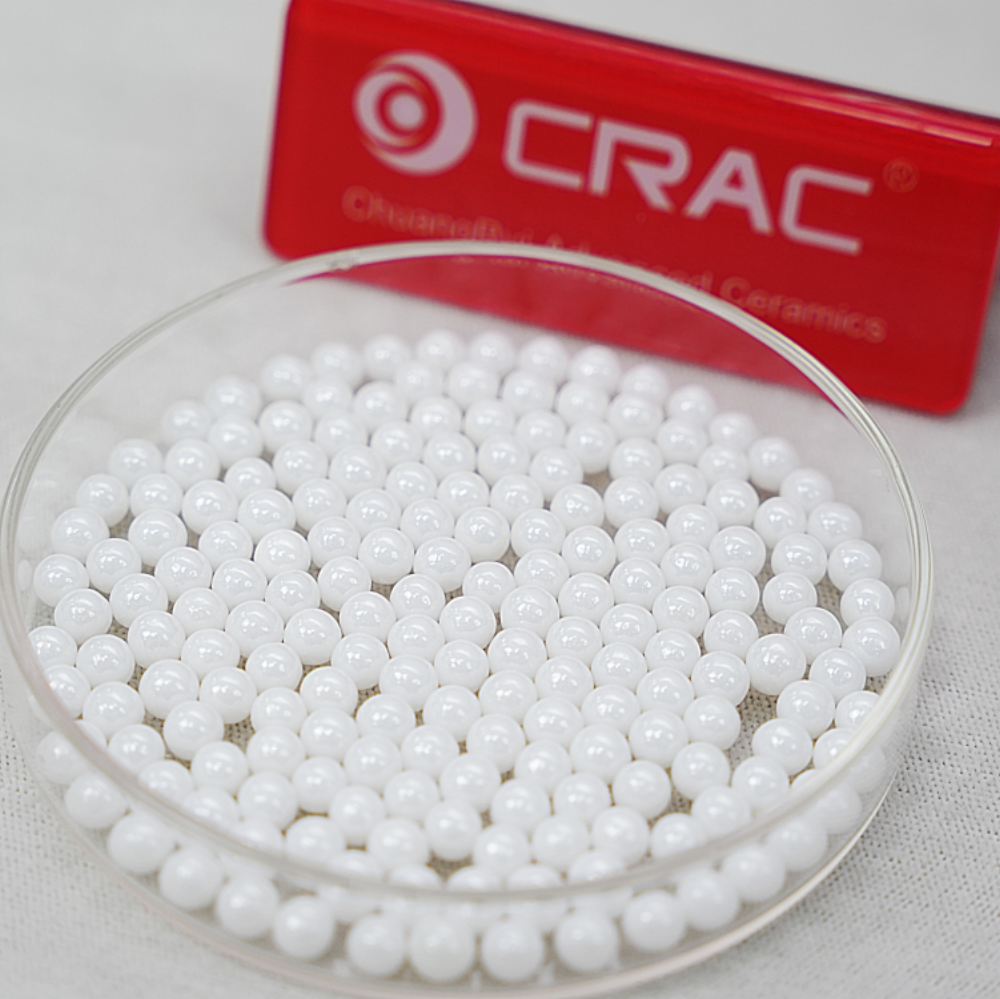
Zirconia Balls, specifically those stabilized with Yttria (YSZ), are the gold standard in ceramic grinding media. Unlike traditional alumina or glass beads, these components offer a unique combination of high density, extreme hardness, and superior fracture toughness. This allows them to withstand the intense centrifugal forces within high-energy pearl mills and planetary ball mills.
The primary reason industry leaders switch to Zirconia Balls is the reduction in "cross-contamination." In sectors like pharmaceuticals and semiconductor materials, even parts-per-million of media wear can ruin a batch. High-purity Yttria-stabilized beads ensure that your slurry remains chemically consistent from start to finish.
Core Technical Factors for Optimal Selection
To select the right media for your specific application, you must evaluate these four technical pillars:
1. Density and Kinetic Energy
Density is directly proportional to grinding efficiency. Standard high-purity zirconia beads typically feature a density of approximately 6.0g/cm3. Higher density means each bead carries more kinetic energy, allowing for faster breakdown of hard aggregates and reducing the total milling time.
2. Wear Resistance and Longevity
Low-quality beads may seem cheaper initially but often result in rapid volume loss. Professional-grade Zirconia Balls produced by CRAC utilize a specialized sintering process to achieve a fine-grained microstructure. This results in wear rates that are 10-20 times lower than alumina, significantly extending the service life of your equipment and reducing the frequency of media top-offs.
3. Sphericity and Surface Smoothness
The "roundness" of the media affects how energy is distributed. Perfectly spherical beads reduce internal friction and heat generation within the mill. Furthermore, a polished, mirror-like surface prevents the media from acting like a sandpaper on your mill's internal linings, protecting your ceramic structural parts.
4. Particle Size Match
As a rule of thumb, the grinding media should be 10 to 30 times larger than the initial particle size of the feed material, and 1000 times larger than the desired final particle size. For nano-milling, our nano-zirconia beads are available in diameters as small as 0.05mm.
Why Global Manufacturers Trust CRAC
At Chuangrui Advanced Ceramics (CRAC), we don't just supply products; we provide engineered solutions. Based on our experience serving hundreds of clients in the ink and coating industry and advanced material processing, we understand that reliability is paramount.
-
Rigid Quality Control: Every batch of our Zirconia Balls undergoes rigorous testing for crushing strength and wear resistance to ensure zero defects.
-
Customized Solutions: We offer various stabilization options, including Yttria, Cerium, and composite ceramic formulations to match your specific chemical environment.
-
Global Expertise: Our technical team assists in mill optimization, helping you select the perfect bead size to maximize throughput while minimizing energy consumption.
Frequently Asked Questions
Q: How can I be sure these Zirconia Balls are compatible with my current mill?
A: Our beads are designed for high-intensity horizontal and vertical mills. We recommend checking your screen gap size to ensure media retention. Our technical team can provide a compatibility matrix upon request.
Q: What is the lead time for large industrial orders?
A: We maintain a significant inventory of standard sizes (0.1mm to 2.0mm). Most orders ship within 7-10 business days. For custom sizes or specialized series like the yellow zirconia series, lead times may vary.
Q: Do you provide samples for testing before bulk purchase?
A: Yes. We understand the importance of validation. We offer free samples (shipping costs apply) for qualified industrial clients to perform laboratory trials and wear-resistance assessments.
Ready to Optimize Your Grinding Process?
Download our technical data sheets or speak with a ceramic specialist today to find the perfect grinding media for your application.
© 2026 Chuangrui Advanced Ceramics (CRAC). All Rights Reserved.
Address: Chuangrui Industrial Park, Zhuzhou, Hunan, China | Email: crac@crac-cn.com