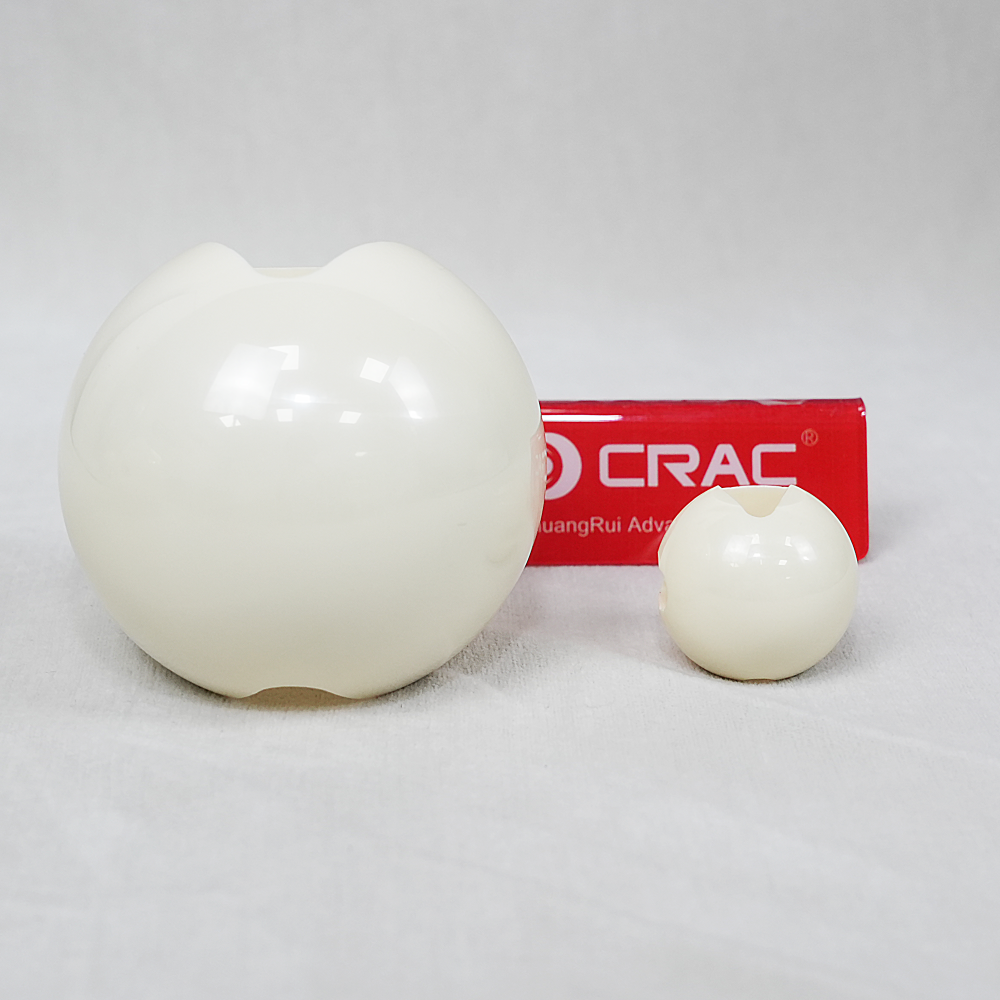
Structural Characteristics of Ceramic Valve Core for Long-Term Stability in Water and Fluid Systems
Structural Characteristics of Ceramic Valve Core for Long-Term Stability in Water and Fluid Systems
Structural Characteristics of ceramic valve Core for Long-Term Stability in Water and Fluid Systems
Explore the engineering precision behind high-performance fluid control and how advanced material science eliminates leaks and maintenance downtime.
Introduction: The Silent Revolution in Fluid Control
In industrial fluid management and domestic water systems, the most common point of failure is often the most overlooked: the internal valve mechanism. Traditional metal or rubber components frequently succumb to calcification, oxidative corrosion, and mechanical wear, leading to persistent leaks and costly system shutdowns. Based on our extensive experience at Chuangrui Advanced Ceramics (CRAC), we have seen how these failures impact operational efficiency.
The solution lies in the Ceramic Valve Core. This component represents a paradigm shift in durability, leveraging the extreme hardness of technical ceramics to provide a seal that remains airtight for millions of cycles. In this guide, we will analyze why the structural characteristics of these cores are essential for any system requiring long-term stability.
The Fundamentals: What Makes a Ceramic Valve Core Superior?
At its heart, a Ceramic Valve Core consists of two highly polished ceramic discs. Unlike traditional valves that rely on the compression of soft materials, ceramic cores utilize the principle of "atomic-level" flatness to create a seal. Here at CRAC, we utilize high-purity alumina and zirconia to manufacture these components, ensuring they withstand environments where others fail.
Exceptional Hardness
Ceramic materials rank just below diamond on the Mohs scale. This prevents debris in the water—such as sand or metal shavings—从 scratching the sealing surface.
Chemical Inertness
Whether dealing with hard water, chlorine, or industrial chemicals, the ceramic discs do not oxidize or corrode, maintaining their structural integrity for decades.
To maximize the service life of a fluid system, understanding the interaction between the Ceramic Valve Core and the fluid medium is critical. Our engineering team focuses on three primary structural attributes:
1. Surface Planarity and Roughness
For a leak-proof seal, the two ceramic discs must be lapped to a flatness measured in light bands. This precision allows a thin film of water to act as a lubricant between the plates, reducing friction to near-zero levels while preventing passage of pressurized fluid.
2. Thermal Shock Resistance
Fluid systems often fluctuate between extreme temperatures. CRAC utilizes advanced zirconia-toughened ceramics that handle rapid thermal transitions without cracking, a common failure point in lower-grade ceramic components.
3. Precision Injection Molding (CIM)
Complex internal geometries within the valve housing are achieved through Ceramic Injection Molding. This allows for high-volume production of intricate parts that maintain micron-level tolerances.
Why Global Industry Leaders Choose CRAC
With over a decade of specialization in advanced ceramics, Chuangrui Advanced Ceramics (CRAC) has become a trusted partner for manufacturers in the medical, semiconductor, and new energy sectors. Our quality control processes ensure that every Ceramic Valve Core we produce meets rigorous international standards.
ISO 9001 Certified Manufacturing Processes
Custom Engineering for High-Pressure Applications
Comprehensive Material Testing and Traceability
Proven Wear Resistance
Up to 500,000+ Cycles without Leakage
Frequently Asked Questions
Q: Are your ceramic components compatible with existing valve housings?
A: Yes. We provide compatible alternative parts designed to fit standard industrial and domestic valve specifications. We recommend sharing your technical drawings for a perfect match.
Q: How can I verify the quality before placing a large order?
A: We believe in the quality of our engineering. CRAC provides free samples for qualified industrial partners to conduct internal testing and validation.
Q: What is the typical lead time for custom Ceramic Valve Core production?
A: For standard specifications, we maintain stock. For custom molds using CIM technology, lead times typically range from 4 to 6 weeks depending on complexity.
Ready to Enhance Your Fluid System Stability?
Contact our technical specialists today for a free consultation or to request your technical sample kit.