wx

Search Products

How to Choose Grinding Media: 5 Key Factors for Battery Material Quality and Yield

In the rapidly evolving landscape of new energy, the precision of cathode and anode material processing determines the performance of the next generation of batteries. Selecting the right Grinding Media is the critical bridge between raw powder and high-performance slurry.

The Challenge of Ultra-Fine Milling in Battery Production

As the demand for higher energy density and faster charging rates grows, battery material manufacturers are pushing the limits of particle size reduction. Whether you are processing NCM, LFP, or silicon-carbon anodes, the milling process often faces three major bottlenecks: metallic contamination, inconsistent particle size distribution, and high operational costs due to rapid bead wear.

At Chuangrui advanced ceramics (CRAC), we have spent over a decade refining our ceramic technology to solve these industrial pain points. This guide leverages our field experience to help you identify the optimal Grinding Media for your specific production needs.


Grinding Media in Battery Industry

Understanding Grinding Media Fundamentals

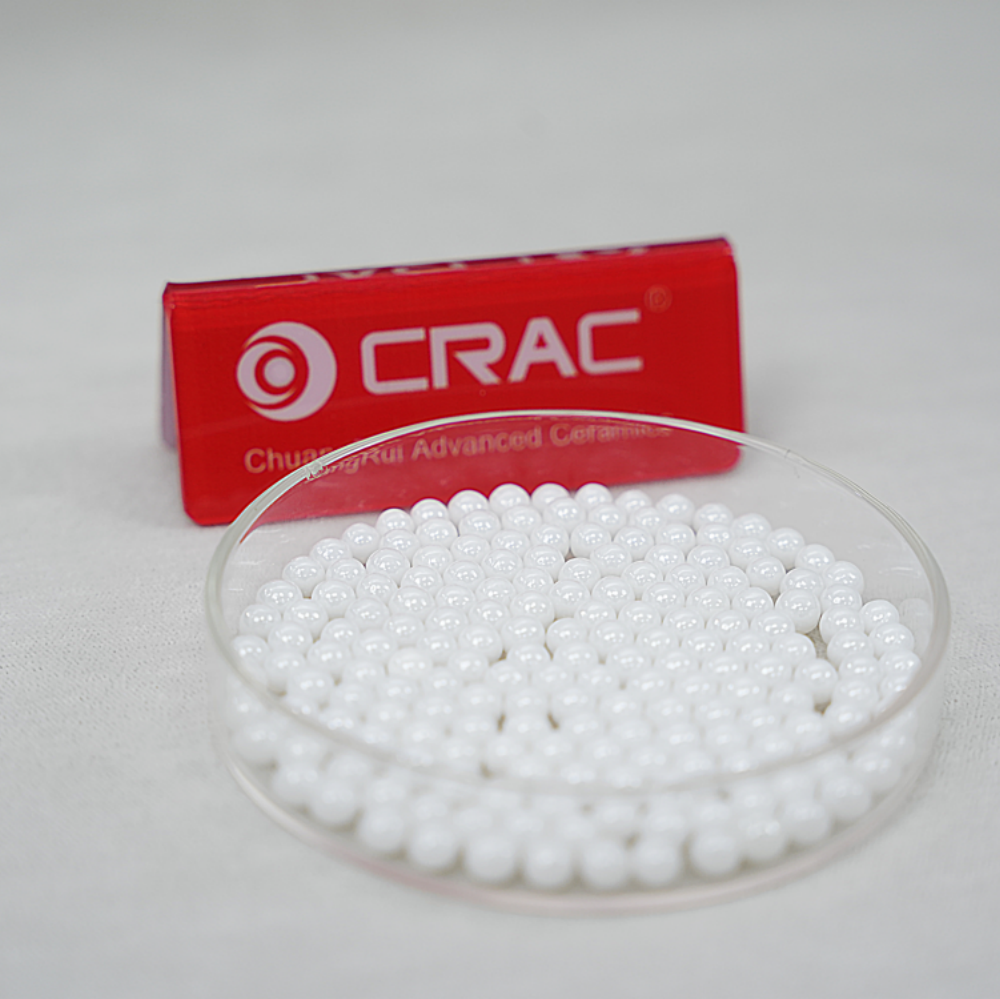
Before diving into selection factors, it is essential to understand that Grinding Media refers to the spherical or cylindrical objects used in bead mills to crush, grind, and disperse materials through impact and attrition. In the battery industry, high-purity Nano Zirconia Beads are the gold standard due to their high density and chemical inertness.

5 Key Factors for Selecting Grinding Media

1. Specific Gravity and Density

The kinetic energy of the milling process is directly proportional to the density of the beads. Higher density Grinding Media, such as Yttria-stabilized zirconia (YSZ), provides more impact force, allowing for faster grinding of hard materials. This efficiency is vital for maintaining high throughput in New Energy Lithium Battery applications.

2. Chemical Purity and Contamination Control

For battery materials, even trace amounts of metallic iron or chromium can lead to internal short circuits and safety failures. Using high-purity Grinding Media like the ZR95 High Purity Series ensures that the milling process remains "zero-contamination," preserving the electrochemical integrity of the slurry.

3. Bead Size and Targeted Particle Fineness

A general rule of thumb is that the Grinding Media should be roughly 10 to 20 times larger than the initial particle size of the material, and the final desired particle size dictates the minimum bead size. For nano-scale dispersion (D50 < 100nm), beads ranging from 0.05mm to 0.3mm are typically required.

4. Wear Resistance and Sphericity

Irregularly shaped beads or those with low fracture toughness will shatter under high-intensity stress, leading to slurry blockage and equipment damage. CRAC’s ultra-wear-resistant Silicon Nitride Microbeads offer superior longevity, significantly reducing the "Total Cost of Ownership" for manufacturers.

5. Chemical Compatibility with Slurry

The Grinding Media must be chemically stable within the solvent or aqueous system used for the battery slurry. Zirconia-based media offer excellent resistance to acid and alkali corrosion, preventing unwanted chemical reactions that could degrade the active materials.

Why Choose CRAC Solutions?

As a pioneer in advanced ceramics, Chuangrui Advanced Ceramics (CRAC) integrates R&D, manufacturing, and technical support. Our products are tested in extreme environments to ensure they meet the rigorous standards of the semiconductor and new energy sectors.

  • icon Strict quality control with ISO certified processes.
  • icon Proven success in ultra-fine grinding for NCM and LFP cathode materials.
  • icon Customized solutions tailored to specific mill types and material viscosities.

Global Reach & Expertise

From the CIBF 2025 exhibition to our global partnerships, CRAC continues to lead the frontier of ceramic material innovation, providing the components that power a greener future.

Frequently Asked Questions

Q: How do I know if my Grinding Media is compatible with my existing bead mill?

A: Most modern high-energy mills are compatible with zirconia and silicon nitride media. However, you must check the screen gap size of your mill to ensure the beads do not leak or block the separator.

Q: What is the typical lead time for bulk orders?

A: For standard sizes, we maintain a robust inventory for immediate dispatch. Custom specifications typically require 2-4 weeks depending on the volume and technical complexity.

Q: Do you provide samples for testing?

A: Yes! We understand that material science requires empirical evidence. We offer free samples for professional clients to conduct pilot-scale testing before making a full-scale commitment.

Ready to Optimize Your Milling Process?

Contact our technical engineers today for a free consultation and sample kit.

© 2026 Chuangrui Advanced Ceramics (CRAC). All Rights Reserved.

Get a Full Quote

Please write a email.