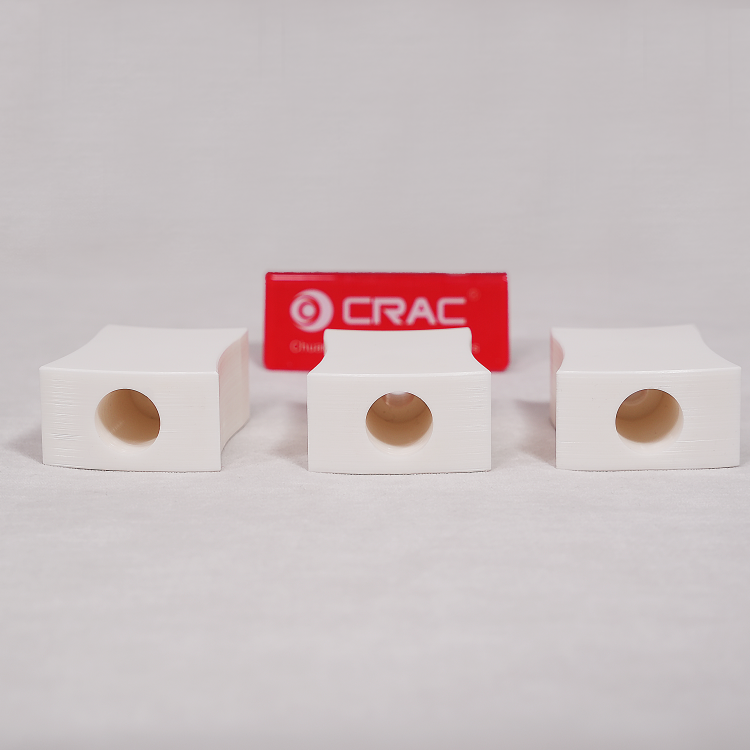
Expert insights into why advanced Ceramic Components are replacing metal in the most demanding industrial environments.
Introduction: The Battle Against Attrition
In the high-stakes world of chemical processing, equipment durability is not just a preference—it is a financial imperative. Traditional metal alloys, while versatile, often fail when exposed to the dual-threat of aggressive chemical corrosion and high-velocity abrasive slurry. This operational bottleneck leads to frequent downtime, contamination, and escalating maintenance costs. At CRAC (Chuangrui Advanced Ceramics), we have witnessed how leading manufacturers transition away from metallic limitations. The solution lies in high-performance Ceramic Components, which offer a level of chemical inertness and hardness that steel simply cannot match.
This guide explores how composite ceramic technology provides a robust framework for solving complex wear challenges, ensuring your chemical machinery operates at peak efficiency for longer intervals.
Understanding Advanced Ceramic Materials
Before diving into specific applications, it is essential to understand why these materials excel. Modern Ceramic Components are not monolithic; they are engineered composites tailored for specific stressors.
- Zirconia (ZrO2): Known for its high fracture toughness and thermal expansion coefficients similar to steel, making it ideal for structural parts.
- Silicon Nitride (Si3N4): Offers exceptional thermal shock resistance and low density, frequently used in ultra-wear applications.
- Alumina (Al2O3): The cost-effective standard for high-temperature resistance and chemical stability in grinding and dispersing.
Strategic Solutions for Chemical Machinery
Fluid control systems in chemical plants handle corrosive media that erode metal seats within weeks. By utilizing ceramic valve core technology, CRAC helps industries achieve zero-leakage performance and a lifespan 5-10 times longer than traditional valves.
2. Precision Shafts and Bushings
In pumping systems, high-speed friction generates heat that compromises material integrity. Our zirconia ceramic shafts maintain dimensional stability under extreme pressure, reducing vibration and preventing catastrophic equipment failure.
Why Trust CRAC for Your Component Needs?
Drawing from over a decade of experience serving the chemical and mechanical engineering fields, CRAC has refined a manufacturing process that prioritizes micron-level precision. Our Ceramic Injection Molding (CIM) technology allows us to mass-produce complex geometries that were previously impossible to machine.
We adhere to rigorous quality control standards, ensuring every batch of Ceramic Components meets global industrial certifications. Whether you are in the semiconductor field or the lithium battery industry, our materials are designed to eliminate metal contamination and maximize purity.
Frequently Asked Questions (FAQ)
How do I know if ceramic is compatible with my existing machinery?
Our technical team provides a full compatibility audit. We design Ceramic Components as "drop-in" replacements for standard metal parts, ensuring seamless integration without requiring extensive equipment redesign.
What is the typical lead time for custom parts?
Standard components are usually in stock. For custom engineered solutions, lead times typically range from 4 to 6 weeks, depending on the complexity and volume of the order.
Do you provide samples for testing?
Yes. We understand the importance of material validation. CRAC offers free samples of various ceramic materials for initial quality inspection and pilot testing. Please contact our sales team to discuss your specific requirements.
Ready to Upgrade Your Industrial Efficiency?
Don't let wear and tear dictate your production schedule. Switch to precision-engineered Ceramic Components today.
Email: crac@crac-cn.com
© 2026 Chuangrui Advanced Ceramics (CRAC). All Rights Reserved.