🔬
Particle Size
50–300 nm
Nano-grade ZrO₂ crystallites
⚡
Grinding Efficiency
2–3× Faster
vs standard YSZ beads
🎯
Target Fineness
D50 < 100 nm
Consistent PSD, batch-to-batch
🧪
Purity
≥ 94.5% ZrO₂
Ultra-low contamination
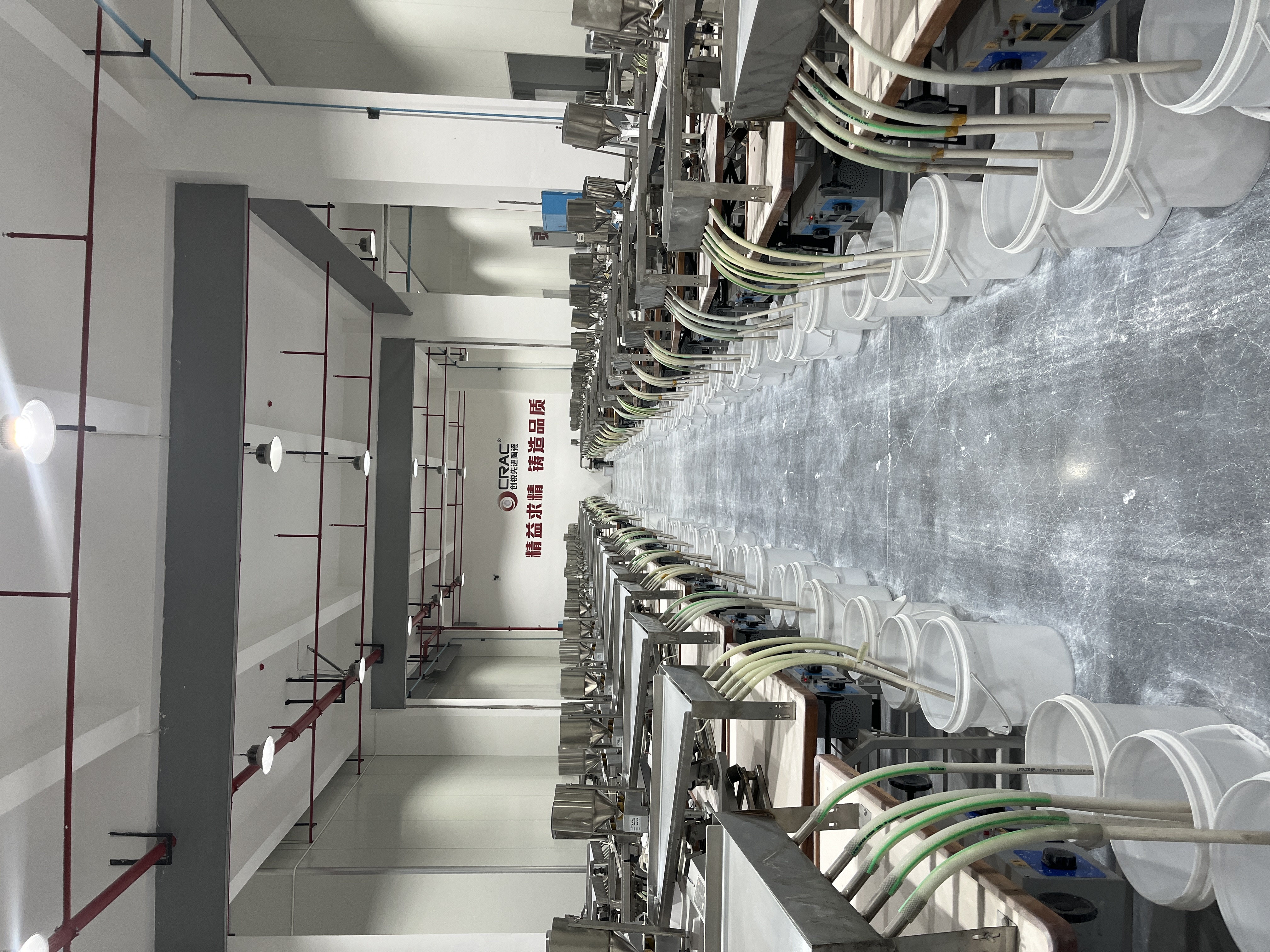
Figure 1: Green body inspection for nano zirconia grinding beads — uniform submicron precursor ensures consistent sintering density
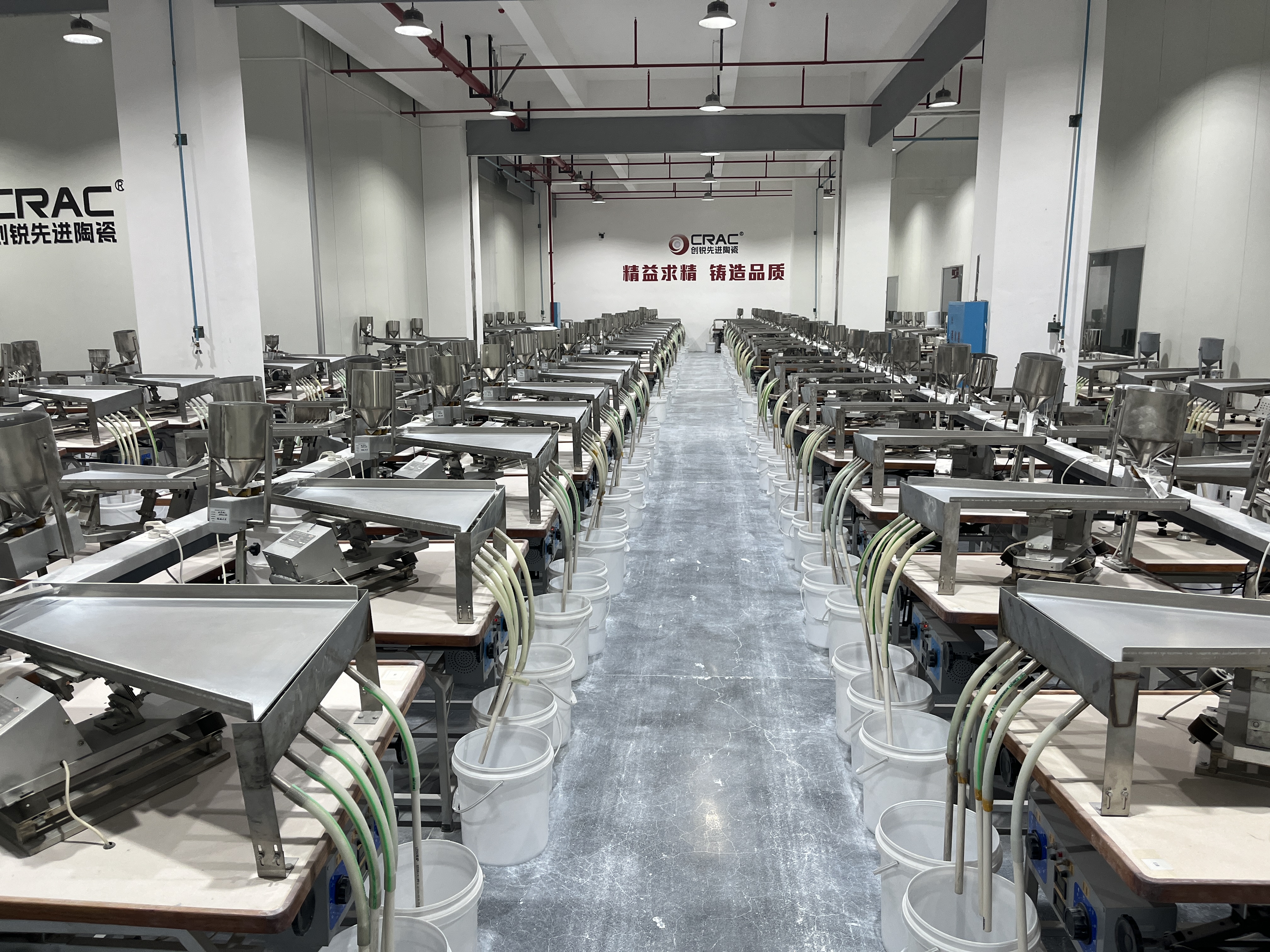
Figure 2: Post-sintering quality control — each nano bead batch undergoes rigorous dimensional and density verification
What Makes Nano Zirconia Beads Different?
Standard yttria-stabilized zirconia (YSZ) beads typically feature crystallite sizes of 200–500 nm and bead diameters starting at 0.3–0.5 mm. Nano zirconia grinding beads push this threshold — achieving crystallite sizes of 50–300 nm through advanced nano-powder processing and precision sintering. This structural refinement translates directly into grinding performance: more grain boundaries per unit volume mean higher surface energy, more active contact points, and dramatically improved milling kinetics.
The key differentiator is the internal microstructure. Conventional YSZ beads, while highly wear-resistant, contain larger crystallites that limit the minimum achievable particle size in the milled product. Nano-grade beads bring the grinding media's own grain structure closer to the target particle size of advanced materials — enabling D50 targets below 100 nm that standard beads simply cannot reach without unacceptable contamination or cycle times.
The Structure-Performance Link
Nano zirconia beads are produced from high-purity nano-ZrO₂ powder (D50 ~50 nm) via spray granulation, cold isostatic pressing, and precisely controlled low-temperature sintering. This preserves the nano-crystallite structure that would otherwise coarsen under conventional high-temperature firing. The result: beads with 1,200–1,350 HV hardness, ≥ 94.5% ZrO₂ content, and surface roughness below 0.02 μm Ra — a combination no standard grinding media can match.
Five Key Advantages of Nano Zirconia Beads
1
Faster Grinding Kinetics — 2–3× Throughput Gain
Nano-crystallite beads provide significantly higher specific surface area per unit volume compared to standard beads. Combined with elevated surface energy at grain boundaries, nano beads accelerate particle breakage rates. In lithium battery cathode material (NCM/LFP) milling, switching from conventional 0.3 mm YSZ beads to nano-grade 0.1–0.2 mm beads has been shown to reduce grinding time by 40–60% while achieving the same or finer D50 targets.
2
Superior Particle Size Distribution (PSD) Control
The hallmark of nano bead performance is narrower, more consistent PSD. Standard beads often produce bimodal distributions in the submicron range due to irregular contact dynamics. Nano beads, with their refined grain structure and tighter dimensional tolerances (±0.02 mm on diameter), deliver D90/D10 ratios below 3.0 — critical for battery slurry homogeneity and MLCC dielectric layer uniformity. Visit our Zr95 nano zirconia beads product page for detailed specifications.
3
Ultra-Low Wear Rate — Extended Media Service Life
Despite their smaller size, nano beads exhibit wear rates as low as 2–5 ppm/hour under typical operating conditions — comparable to or better than standard YSZ beads. The nano-crystallite structure enhances toughness via the transformation toughening mechanism while maintaining hardness. For high-value processes like pharmaceutical API micronization or semiconductor CMP slurry preparation, this translates to 30–50% fewer media change-outs per production year.
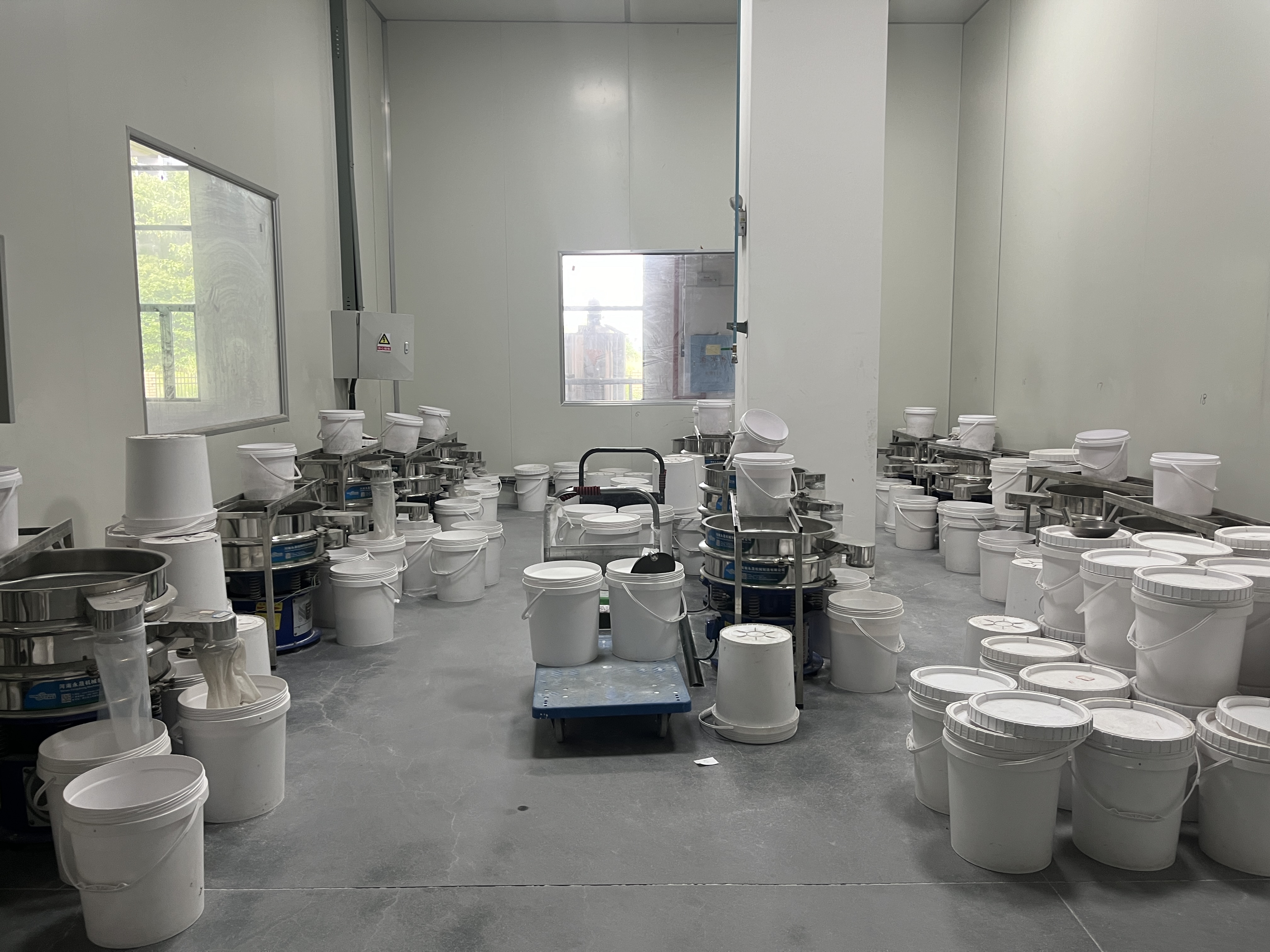
Figure 3: Precision sieving station — nano beads are classified to sub-10μm size tolerance for guaranteed PSD uniformity
4
Minimum Product Contamination
Nano beads achieve ≥ 94.5% ZrO₂ purity with Y₂O₃ stabilizer at 5.2 ± 0.2%. Trace element levels (Fe₂O₃, Na₂O, SiO₂) are controlled below 0.02% each — critical for zero-contamination grinding processes. In electronic-grade material processing, nano beads introduce less than 10 ppm total metallic contamination over a full production campaign, meeting the stringent purity requirements of solid-state battery electrolytes and advanced dielectric formulations.
5
Batch-to-Batch Product Consistency
Perhaps the most underappreciated benefit: nano beads enable reproducible milling outcomes across production batches. The refined microstructure means every bead in a charge behaves predictably — wear is uniform, contact dynamics are consistent, and PSD targets are achieved within tighter tolerances. For lithium battery material manufacturers running 24/7 production, this consistency directly reduces batch rejection rates and downstream quality issues.
Nano Beads vs Standard YSZ Beads: Head-to-Head
| Parameter |
Nano YSZ Beads |
Standard YSZ Beads |
Advantage |
| Crystallite Size |
50–300 nm |
200–500 nm |
✅ Nano |
| Available Bead Diameter |
0.05–0.3 mm |
0.3–3.0 mm |
✅ Nano |
| Hardness (HV) |
1,200–1,350 |
1,100–1,300 |
✅ Nano |
| Density (g/cm³) |
≥ 6.0 |
≥ 6.0 |
= Equal |
| Wear Rate (ppm/hr) |
2–5 |
3–8 |
✅ Nano |
| Min. Achievable D50 |
< 100 nm |
~200 nm |
✅ Nano |
| PSD Uniformity (D90/D10) |
< 3.0 |
3.5–5.0 |
✅ Nano |
| Grinding Time (relative) |
1.0× (baseline) |
1.5–2.5× |
✅ Nano |
💡 Key Insight: Nano beads win on 7 out of 8 parameters. The only tie — density — is actually a shared strength: both deliver the high impact energy that makes zirconia the preferred choice over alumina.
Industry Applications: Where Nano Beads Deliver
| 🏭 Industry |
Material |
Target D50 |
Rec. Bead Size |
Key Benefit |
| 🔋 Lithium Battery |
NCM, LFP, LCO cathode |
0.3–1.0 μm |
0.1–0.2 mm |
40–60% grinding time reduction |
| 💻 MLCC / Dielectrics |
BaTiO₃, X7R, C0G |
80–150 nm |
0.05–0.1 mm |
Ultra-low metal contamination |
| 💊 Pharmaceuticals |
API micronization |
0.5–5.0 μm |
0.2–0.3 mm |
Chemical inertness, GMP compliant |
| 🎨 Ink & Pigments |
Carbon black, TiO₂, organic pigments |
0.1–0.5 μm |
0.1–0.3 mm |
Narrow PSD, consistent color strength |
| ⚗️ Advanced Ceramics |
Al₂O₃, ZrO₂, Si₃N₄ powder |
0.1–0.5 μm |
0.1–0.2 mm |
Like-on-like grinding, no cross-contamination |
| 🔬 Semiconductor |
CMP slurry, polishing compounds |
30–80 nm |
0.03–0.1 mm |
Sub-ppb metallic contamination |
| 🧴 Cosmetics |
TiO₂, ZnO sunscreen actives |
50–200 nm |
0.1–0.2 mm |
Transparency + UV protection balance |
The TCO Case: Why Nano Beads Cost Less Over Time
📉
Media Consumption
−30 to −50%
Lower wear rate = fewer refills
⚡
Energy Cost
−40 to −60%
Shorter cycle = less kWh/kg
✅
Batch Rejection
−50 to −70%
Consistent PSD = fewer rejects
🔄
Throughput
+50 to +150%
More batches per shift
📊 Real-World Example — Lithium Battery Cathode Milling
A mid-size NCM cathode producer switched from standard 0.3 mm YSZ beads to nano-grade 0.15 mm beads. Results over 6 months:
- Grinding time: reduced from 85 min to 45 min per batch
- Media consumption: dropped 42% (extended bead life)
- D50 consistency: standard deviation improved from ±0.08 μm to ±0.03 μm
- Annual TCO savings: approximately ,000 on a single production line
When to Choose Nano Beads (and When Not To)
✅ Best For
- Target particle size below 0.5 μm
- High-value products where consistency = revenue
- Processes requiring sub-10 ppm metallic contamination
- Semiconductor-grade and electronic materials
- 24/7 production lines with high throughput demands
- Applications where batch rejection cost > media cost
⚠️ Not Ideal For
- Coarse grinding with target D50 > 5 μm
- Low-value commodity minerals — standard grinding balls more cost-effective
- Processes with aggressive media separation limitations (screen < 0.05 mm challenging)
- Applications where bead cost is the primary (and only) concern
How to Evaluate Nano Zirconia Beads — A Buyer's Checklist
1
Crystallite size verification: Request TEM/XRD data confirming crystallite size within the 50–300 nm range
2
Bead size distribution certificate: Verify D90/D10 ≤ 1.5 for bead diameter uniformity — inconsistent bead sizing causes uneven wear
3
Chemical purity certificate (ICP-MS): Ensure ZrO₂ ≥ 94.5%, Y₂O₃ = 5.2 ± 0.2%, Fe₂O₃/Na₂O/SiO₂ each < 0.02%
4
Wear rate test data: Ask for wear rate under your specific process conditions — target < 5 ppm/hr at typical mill speeds
5
Trial mill test: Run a side-by-side comparison with your current media — measure grinding time, final D50, PSD width, and contamination
Conclusion: Nano Is Not a Luxury — It's an Efficiency Multiplier
Nano zirconia grinding beads represent far more than a premium upgrade. They are a process efficiency multiplier that pays for itself through faster cycle times, lower media consumption, fewer batch rejections, and measurable improvements in product quality. For industries where particle size control at the submicron level directly impacts product performance — lithium batteries, MLCCs, semiconductor CMP, advanced ceramics — the question is increasingly not whether to use nano beads, but how soon the transition will pay back.
When paired with optimal mill parameters and proper grinding media selection, nano zirconia beads consistently deliver the trifecta of modern manufacturing: higher throughput, lower total cost, and uncompromising quality. Ready to explore how nano beads can transform your process? Contact our technical team for a customized evaluation.
Experience the Nano Advantage
From laboratory trials to full-scale production, our Zr95 nano zirconia grinding beads deliver measurable improvements in efficiency, consistency, and cost. Explore our resources or start a technical conversation today.