Walk into any advanced ceramics factory and the first thing you notice is the absence of metal. No cast-iron tooling, no steel fixtures — just rows of white-coated technicians guiding ceramic powder through a transformation that takes it from micron-sized granules to components capable of outlasting the toughest alloys by an order of magnitude. This is not metallurgy. This is ceramic engineering at industrial scale.
For procurement managers, R&D engineers, and quality directors evaluating ceramic suppliers, understanding what happens inside the factory matters. An advanced ceramics factory is only as good as its process control — and process control is invisible in a finished part. This article walks through the key manufacturing technologies that separate precision-grade ceramic production from commodity output, drawing on two decades of hands-on production experience at CRAC, a leading manufacturer of zirconia grinding media and ceramic structural parts.
From Powder to Performance: The Ceramic Manufacturing Chain
Advanced ceramic manufacturing follows a five-stage chain, each with its own technology requirements and failure modes:
| Stage |
Process |
Key Technology |
Critical Quality Factor |
| 1 |
Powder Preparation |
Spray granulation, binder mixing |
Granule size distribution, flowability, binder homogeneity |
| 2 |
Forming |
Dry pressing, CIP, CIM, green machining |
Green density uniformity, dimensional tolerance, internal defect control |
| 3 |
Sintering |
Temperature profile control, atmosphere management |
Density, grain size, phase composition, shrinkage consistency |
| 4 |
Precision Machining |
CNC grinding, diamond tooling, lapping |
Surface finish (Ra), dimensional accuracy (μm), edge quality |
| 5 |
Inspection & QC |
CMM, microscopy, batch traceability |
Lot consistency, process capability (Cpk), full-chain traceability |
What distinguishes an advanced ceramics factory from a commodity producer is not the existence of these stages but the control architecture built around them. Every stage has decision points. Every decision point has a measurement protocol. And every measurement feeds back into the process.
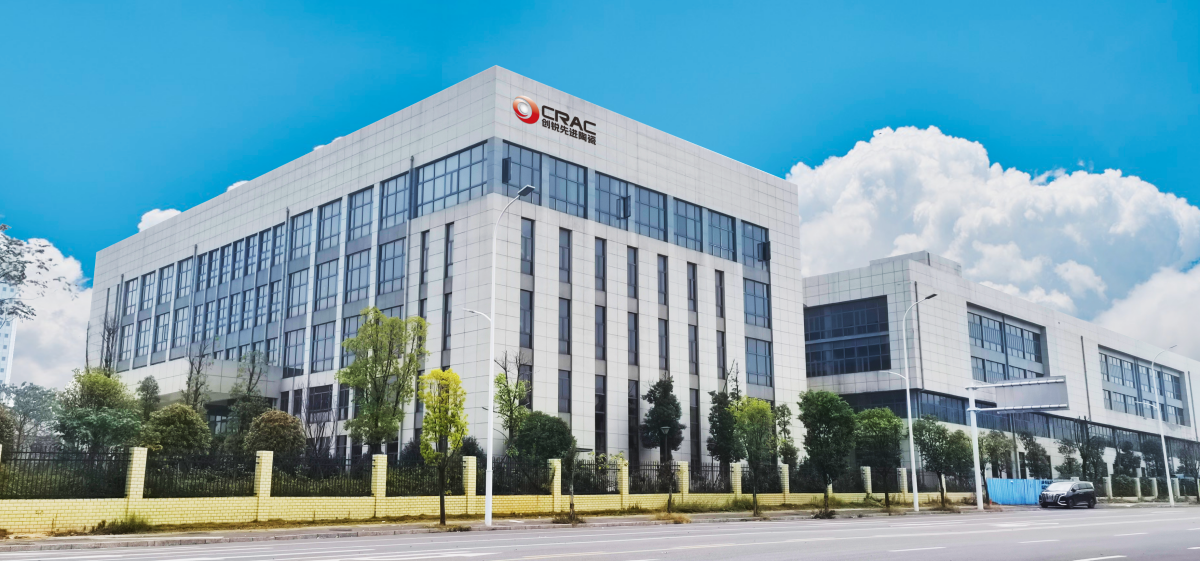
Figure 1: Inside an operating advanced ceramics factory — the production floor integrates powder processing, forming, sintering, and precision machining stages under a unified quality management system. Each production bay is controlled for temperature, humidity, and particulate contamination to ensure batch-to-batch consistency in every ceramic component shipped.
Stage 1: Powder Preparation — Where Quality Begins
Ceramic manufacturing starts not at the press but in powder preparation. The raw ceramic powder — typically yttria-stabilized zirconia (YSZ), alumina, silicon nitride, or composite formulations — arrives as fine particles that clump unpredictably. Without proper granulation, these powders produce green bodies with density variations that survive all the way to the finished part. For a detailed comparison of zirconia material grades and their respective properties, see our comprehensive material classification guide.
The solution is spray granulation. A slurry of ceramic powder, binder, and dispersant is atomized into a heated chamber where droplets form spherical granules with precisely controlled size distribution. This step determines:
- Flowability — granules must fill die cavities uniformly during pressing, with no bridging or segregation
- Binder distribution — uneven binder leads to density gradients during compaction that become cracks during sintering
- Granule crush strength — granules must deform under press pressure but not produce fine debris that creates internal defects
In a well-run advanced ceramics factory, the granulation room operates under strict environmental controls — temperature, humidity, and airborne particle counts are monitored continuously. The resulting granules are sampled for particle size distribution (laser diffraction), moisture content, and tap density before release to forming.
Stage 2: Forming — Shaping Before the Part Exists
Forming is where the part acquires its shape — but it is not yet a ceramic. At this stage the material is a "green body": powder particles held together by binder, with roughly 50% of the final density. How that green body is formed determines everything that follows.
An advanced ceramics factory typically operates multiple forming technologies in parallel, each suited to different part geometries and production volumes:
| Forming Method |
Best For |
Typical Tolerance |
Production Scale |
| Dry Pressing |
Simple shapes, high volume (beads, discs, rings) |
±0.5% ~ ±1% |
10,000+ pcs/day |
| Cold Isostatic Pressing (CIP) |
Large, complex preforms (mill jars, liners) |
±1% ~ ±2% |
100 ~ 1,000 pcs/day |
| Ceramic Injection Molding (CIM) |
Small, complex 3D geometries (scissor blades, capillary tubes) |
±0.3% ~ ±0.5% |
5,000+ pcs/day |
| Green Machining |
Prototypes, small batches, threads |
±0.05mm |
10 ~ 100 pcs/day |
The choice between these methods is not academic. Dry pressing is fast but limited to simple geometries. CIM produces complex shapes at volume but requires tooling investment that only pays off at scale. CIP delivers the most uniform density in large bodies but demands post-forming green machining. A capable advanced ceramics factory maintains tooling and expertise across all four techniques, matching the method to the part — not the other way around. For a focused look at the CIM process, refer to our guide on ceramic injection molding for precision parts.
Stage 3: Sintering — Where Ceramics Become Ceramics
Sintering is the thermal treatment that transforms a compacted powder body into a dense, monolithic ceramic. It is simultaneously the most scientifically complex and the most practically unforgiving step in the entire manufacturing chain. Get the temperature profile wrong by 20°C and the furnace output is scrap.
In an advanced ceramics factory, sintering is managed with the precision of a semiconductor fab:
- Multi-zone temperature control — industrial kilns with independently controlled heating zones maintain temperature uniformity across the entire payload, typically within ±5°C at peak temperatures exceeding 1,500°C
- Controlled atmosphere — zirconia sinters in air; silicon nitride requires nitrogen. Gas flow rates and purity are monitored in real time, because even trace oxygen can produce unacceptable surface phases in nitride ceramics
- Shrinkage prediction — ceramic parts shrink 15-25% linearly during sintering. A factory that cannot predict this shrinkage to within 0.5% cannot hold final tolerances without excessive post-sinter grinding
- Batch traceability — each kiln load is documented with time-temperature profiles, atmosphere logs, and operator sign-off, creating an auditable record for every production lot
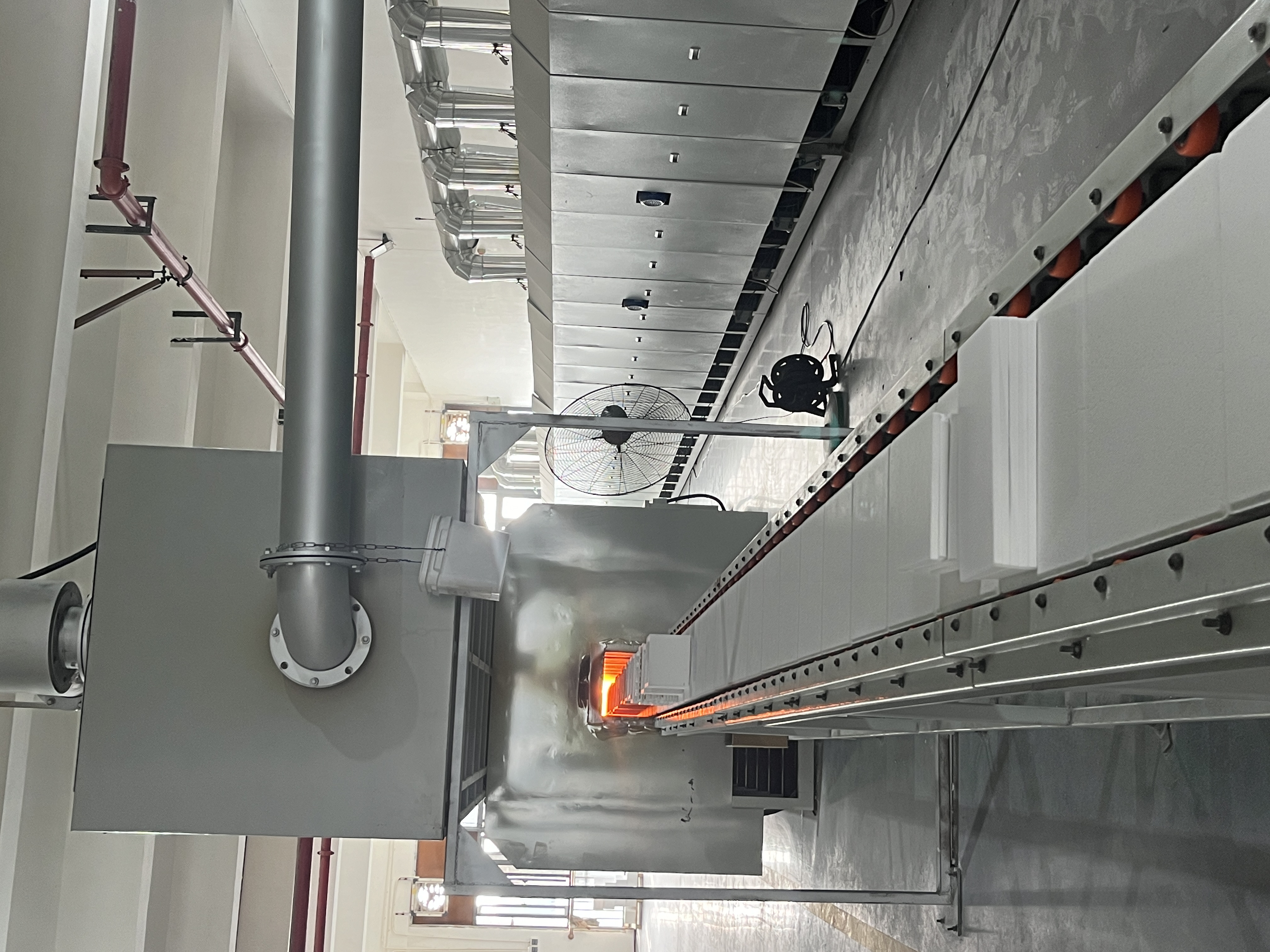
Figure 2: Multi-zone industrial sintering furnace in operation at an advanced ceramics factory — these kilns maintain ±5°C uniformity at peak temperatures above 1,500°C across full-load firing cycles. Atmosphere control (air for zirconia, nitrogen for silicon nitride) is continuously monitored to prevent surface phase degradation.
Stage 4: Precision Machining — Microns Matter
Sintered ceramics are hard — harder than any tool steel — and that hardness is both the product's greatest asset and the machinist's greatest challenge. Post-sinter machining of zirconia and alumina ceramics requires diamond tooling, rigid machine structures, and process knowledge that differs fundamentally from metal machining.
Key precision machining capabilities found in a well-equipped advanced ceramics factory:
- CNC grinding centers — multi-axis diamond grinding for achieving dimensional tolerances of ±0.005mm on cylindrical surfaces, bores, and faces
- Centerless grinding — for high-volume cylindrical parts like plungers, shafts, and valve stems, achieving cylindricity below 0.005mm and surface finish Ra 0.05μm. For a detailed look at how these precision-ground ceramic plungers perform in high-pressure pump systems, see our dedicated plunger guide.
- Lapping and polishing — flat and spherical surfaces finished to Ra 0.02μm (mirror finish) for sealing faces and optical-grade components
- Micro-bead sorting and finishing — automated optical sorting systems that grade grinding media beads by diameter and sphericity, achieving roundness >0.98 across millions of beads per batch. For the full story on yttria-stabilized zirconia grinding beads and their applications, see our comprehensive grinding media guide.
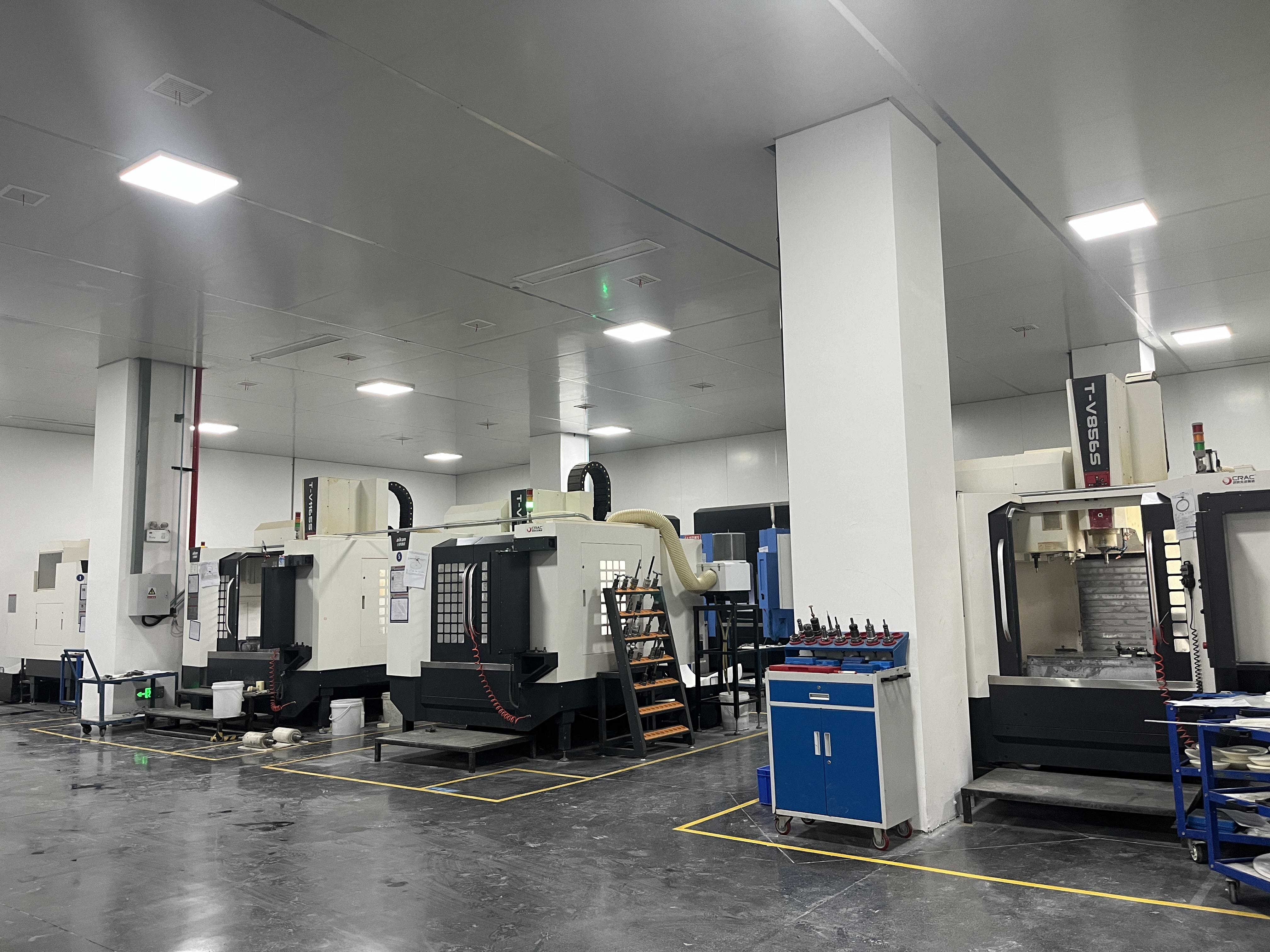
Figure 3: CNC diamond grinding center machining post-sinter ceramic components — ceramic machining operates under fundamentally different parameters than metal machining. Diamond tooling, rigid fixtures, and controlled coolant flow are essential to achieve sub-10-micron tolerances without introducing micro-cracks at the surface.
Grinding parameter selection — feed rate, depth of cut, wheel grit — is critical. Too aggressive and you introduce subsurface micro-cracks that become failure initiation points under load. Too conservative and you lose productivity. The difference between an experienced ceramic machinist and a generalist is knowing this boundary for every material grade.
Stage 5: Inspection & Quality Control — Nothing Leaves Without Proof
The final stage in an advanced ceramics factory is not manufacturing at all — it is verification. Every production batch passes through a quality gate that includes:
- Dimensional inspection — coordinate measuring machines (CMM) with sub-micron resolution verify key dimensions against engineering drawings, with statistical process control (SPC) charts tracking Cpk values over time
- Surface quality — profilometers measure Ra/Rz surface finish; visual inspection under magnification identifies chipping, pitting, or discoloration
- Density verification — Archimedes method testing on sample pieces from each sintering batch confirms density within specification (typically >99% theoretical for high-grade Y-TZP)
- Phase analysis — X-ray diffraction (XRD) verifies the absence of monoclinic phase in yttria-stabilized zirconia — a critical check because monoclinic content indicates incomplete stabilization and predicts poor aging resistance
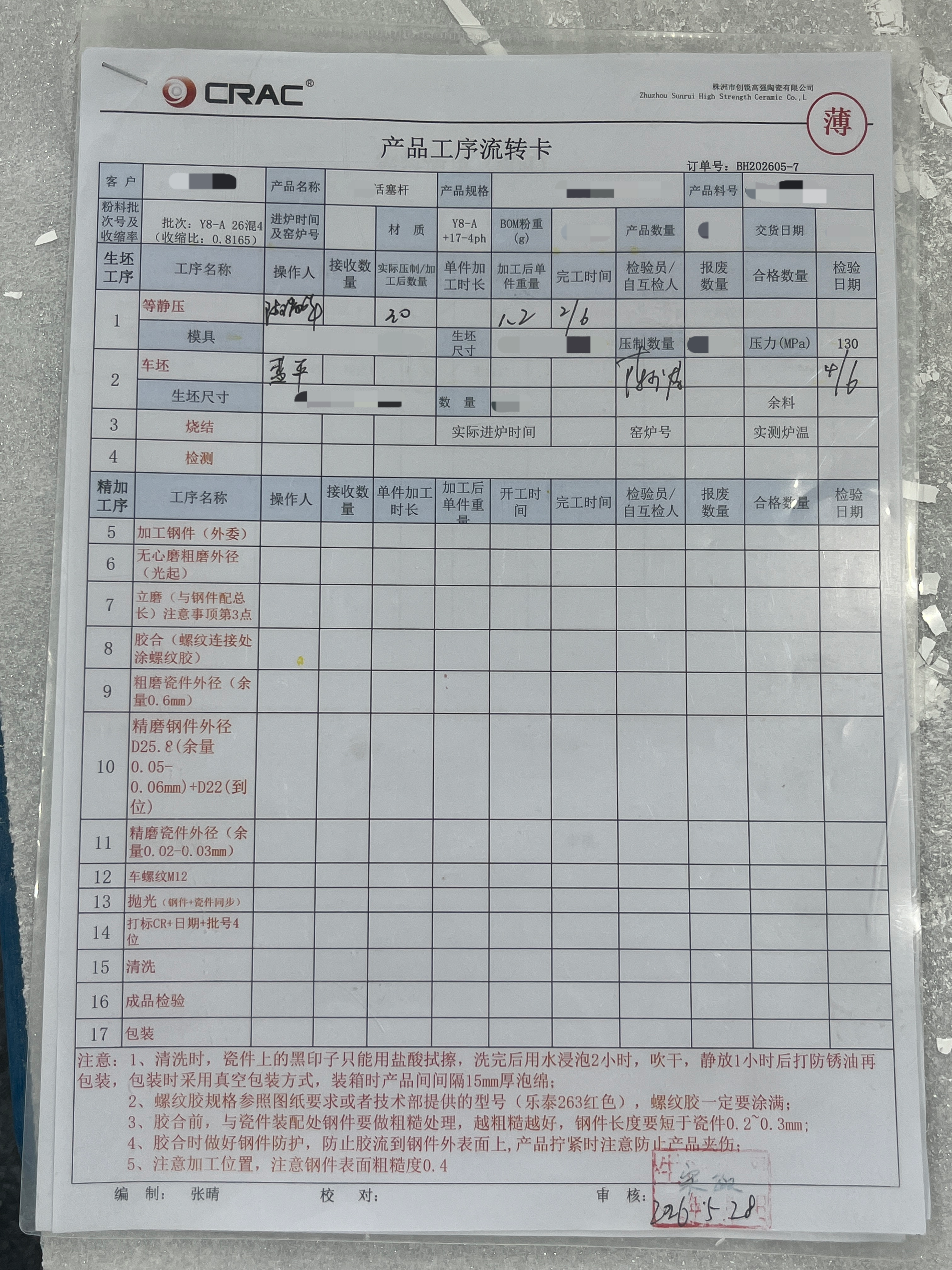
Figure 4: Production process traveller cards in an advanced ceramics factory — every batch carries a documented chain of custody from powder lot to finished part. This traceability system enables full root-cause analysis when specifications are not met and provides auditable quality records for ISO-certified supply chains.
What Separates a Precision Ceramics Factory from the Rest
After walking through the five stages, the distinction between an advanced ceramics factory and a commodity supplier becomes clear. It is not about owning equipment — anyone can buy a kiln or a CNC. It is about how the factory connects those machines into a coherent quality system:
| Capability |
What It Means for Buyers |
| Closed-loop process control |
Every measurement feeds back: if Cpk drifts below 1.33, the line stops until root cause is identified. This is the difference between "we check some parts" and "every batch is in statistical control." |
| Material formulation competence |
Custom stabilizer levels (3 mol% vs 5 mol% Y₂O₃), dopant additions for color or conductivity, and composite formulations (ZTA, ATZ) are formulated in-house — not ordered from a catalog. |
| Full-chain traceability |
From raw powder lot number to finished part serial number, every step is documented. When something goes wrong — and in ceramics, something always goes wrong eventually — you can find it. |
| Multi-process flexibility |
Dry pressing, CIP, CIM, and green machining under one roof means the part geometry dictates the process — not the factory's equipment limitations. |
| Application-aware engineering |
A factory that grinds beads for lithium battery manufacturers understands the contamination risks differently than one that only supplies structural ceramics. This domain knowledge directly shapes process decisions. |
Beyond the Factory Floor: The Production Ecosystem
The manufacturing capabilities described above do not exist in isolation. A fully integrated advanced ceramics factory also maintains:
- Tooling workshop — in-house mold and die fabrication for pressing, CIM, and extrusion tooling. External tooling adds weeks to lead times and creates quality handoff problems
- Material testing laboratory — density (Archimedes), hardness (Vickers), fracture toughness (indentation method), wear rate (pin-on-disc), and phase composition (XRD) testing performed on-site — not outsourced to a third-party lab with a two-week turnaround
- Application testing capability — bead mills for grinding media wear testing, hydraulic test stands for ceramic plunger endurance cycling, and environmental chambers for corrosion resistance validation. Learn how ceramic mechanical parts improve reliability in corrosive environments through rigorous application testing.
These support functions are the difference between a factory that ships products and one that ships performance guarantees.
How to Evaluate an Advanced Ceramics Factory: Five Questions for Your Supplier
When visiting or auditing an advanced ceramics factory, five questions will tell you more than any brochure:
1. Can I see your sintering temperature logs? — A factory that cannot produce time-temperature curves for every batch has no process history to troubleshoot from.
2. What is your Cpk for the critical dimension on my part? — If they do not track Cpk, they do not know their process capability. If Cpk is below 1.33, the process is not stable enough for precision parts.
3. How do you verify monoclinic phase content in Y-TZP? — Y-TZP aging failure (low-temperature degradation) starts with monoclinic transformation. A factory that does not monitor this with XRD is selling parts that may fail in humid environments after months of service.
4. Where do your raw powders come from? — Ceramic powder quality varies enormously between suppliers. A factory that purchases from the lowest bidder produces parts with variable properties. A factory with stable, long-term powder partnerships produces consistent parts.
5. Can you show me a non-conformance report from the last six months? — Every factory has quality issues. A factory that says otherwise is either lying or not looking. What matters is how they handle them — closed-loop corrective action with documented follow-up, or a "ship and hope" mentality.
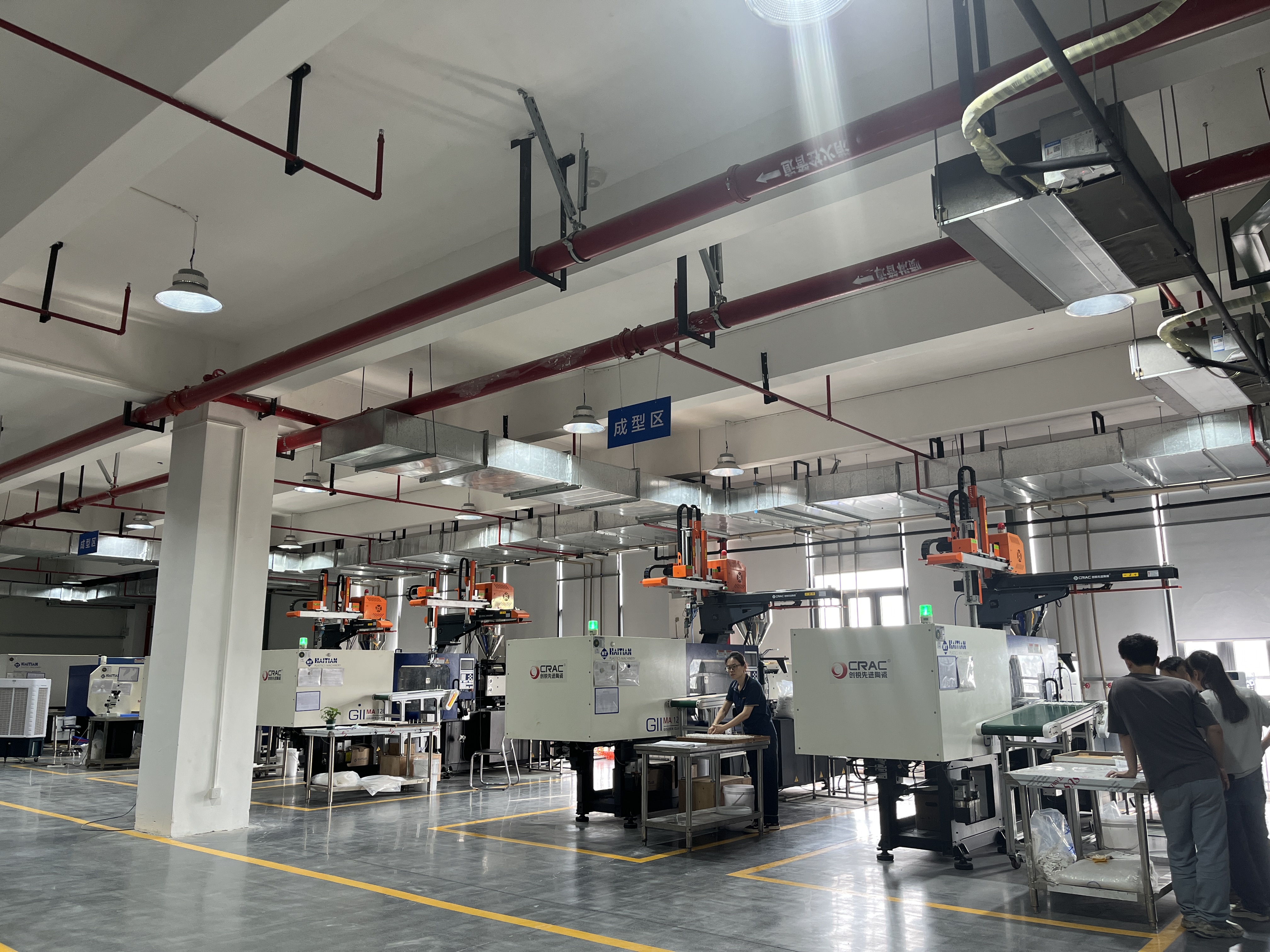
Figure 5: Ceramic injection molding (CIM) workshop in an advanced ceramics factory — CIM bridges the gap between high-volume polymer processing and the property demands of engineering ceramics, enabling complex 3D geometries at production scale. The cleanroom-level environmental controls visible here are standard for precision CIM operations.
Looking for a Precision Ceramic Manufacturing Partner?
CRAC brings 28 years of advanced ceramics production — from proprietary material formulations to micron-level machining.
|
Who We Are
CRAC (Zhuzhou Chuangrui) — the first developer of zirconia beads in China (1997). ISO 9001-certified, serving 100+ global enterprises.
|
Our Capabilities
In-house granulation, dry pressing, CIP, CIM, multi-zone sintering, and CNC diamond grinding — all under one roof.
|
What We Need
Send your part drawing, target material, and volume requirement for a feasibility assessment and quotation.
|